|
RESPO PRODUCTS · GAS SAFETY BRIEFING
A single pumped multi-gas detector costs more than a laptop. A fixed transmitter installation costs several times its purchase price once mounted, wired, and commissioned. Yet fleets everywhere age prematurely - not from bad hardware, but from small daily habits.
Field Notes · For Maintenance & Safety Teams
|
|
G as detection fleets are expensive. And most of that expense ages prematurely - not because the instruments were badly made, but because of what happens to them between calibrations. The good news: most premature ageing is preventable, and the fixes cost almost nothing.
Here is where equipment life is actually won or lost.
01 Storage Is Not a Pause Button
The most common misconception we encounter: "It's in the box, so it's not ageing." Electrochemical sensors age from the moment they are manufactured - on a worker's lapel or in a storeroom, identically. Spares sitting on a shelf for two years are two-year-old sensors. And conditions matter enormously.
- ▸ Storerooms above 30°C accelerate electrolyte desiccation - a detector near a steam line or in a hot site cabin ages faster than the calendar suggests
- ▸ Damp storerooms corrode contacts and degrade membranes
- ▸ Lithium packs stored fully discharged can drop below recovery voltage and never charge again - store at 50-70% charge and top up periodically
Best Practice Buy spares to match your consumption rate, not in bulk. A "great deal" on a dozen sensors that age in your stores is not a deal.
|
02 Respect the Battery
Batteries are the first thing to fail and the most commonly abused component. Deep discharge cycles - leaving detectors uncharged over a long weekend, or "running them flat" before recharging - damage cell chemistry and cut capacity permanently.
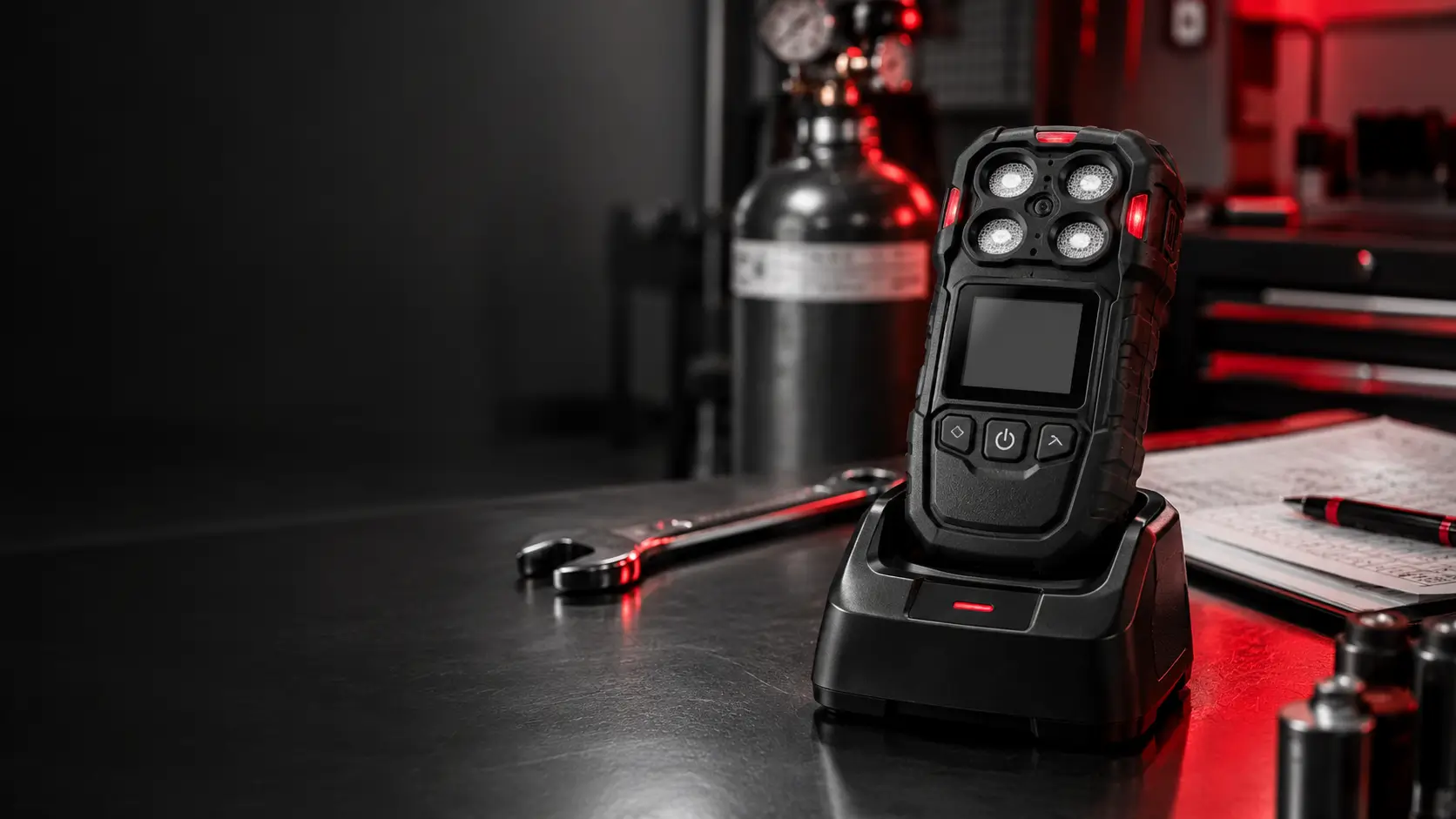
- ▸ Keep detectors on smart charging docks between shifts so every instrument starts the day full
- ▸ Log battery health during bump tests; a unit that no longer holds a full shift is telling you something
Fleet Tip Automated docking stations do double duty: reliable charging and the daily bump test in the same pass, killing two maintenance birds with one cradle.
|
03 Clean Gently, Inspect Often
Gas detectors live in filthy environments - dust, mud, grease, paint overspray, corrosive mists. But aggressive cleaning causes as much damage as the dirt itself.
- ▸ Never use solvents or high-pressure washes on the sensor inlet or housing vents - you can push contaminants into the sensor or damage the flame arrestor on pellistor units
- ▸ Wipe housings with a damp cloth and mild detergent only
- ▸ Inspect filters, membranes, and flame arrestors at every bump test - a clogged filter restricts gas flow, lengthens response time, and forces the pump to work harder
|
04 Handle the Drops You Can't Prevent
Portables get dropped. That is a fact of industrial life. What extends life is not preventing drops but catching the damage they cause.
- ▸ Use the supplied rubber boot or holster - it is not decoration
- ▸ After any significant drop, check the display, alarm sounders, and pump operation before the next shift
- ▸ Log drops against serial numbers - a detector with repeated impacts deserves closer bump-test scrutiny, even if it looks fine
|
05 Calibrate on Schedule, Retire on Evidence
Calibration is not just a safety activity - it is a health-monitoring activity. The span adjustment you apply each cycle is a data point about sensor condition.
- ▸ A sensor needing ever-larger corrections is drifting fast and approaching retirement
- ▸ A sensor that cannot span at all is done - do not "keep trying"
- ▸ Track span trends per serial number and replace sensors before they fail, on your schedule, not mid-turnaround
|
06 Fixed Detectors: Mind the Environment
Fixed transmitters fail differently. Their killers are almost always installation-related - which means they are almost always fixable.
- ▸ Sun and heat: mounting in direct sun cooks electronics and displays - use sunshades
- ▸ Water ingress: check enclosure seals and cable glands every site visit; a weeping gland quietly corrodes the PCB over months
- ▸ Vibration: mounting on vibrating pipe runs fatigues solder joints and loosens terminals - use anti-vibration mounts
- ▸ Wrong process interface: a blocked sample line means the detector is measuring the inside of its own sampling tube - dusty or wet points need filters and rain shields
|
07 Keep Records That Actually Get Used
A calibration sticker tells you the last service date. A maintenance log tells you the story. Fleets that last longest are the ones whose records drive decisions: which locations are harsher than others, which sensor chemistries underperform in your specific plant, when a whole batch - not just one unit - is trending toward failure.
|
The Storeroom Gauge
Where your spares stand, from the moment they were manufactured - not the moment you bought them.
|
The Bottom Line
Extending equipment life is not one big action. It is a dozen small disciplines - charged docks, gentle cleaning, honest logs, timely retirement - practiced consistently. Instruments that are cared for protect workers longer, cost less per year of service, and give you the confidence that when an alarm sounds, it is telling the truth.
|
Fleet Longevity Checklist
| ✓ |
Store spares at 50-70% charge, below 30°C, away from humidity - and buy to consumption, not in bulk |
| ✓ |
Every instrument on a smart dock between shifts; flag any unit that cannot hold a full shift |
| ✓ |
Damp cloth and mild detergent only - never solvents or pressure washers near sensor inlets |
| ✓ |
Log every drop against serial number and bump-test accordingly |
| ✓ |
Trend span adjustments per serial number; retire on evidence, not on failure |
| ✓ |
Inspect fixed-detector sun exposure, glands, seals, and sample lines at every site visit |
| ✓ |
Turn maintenance records into decisions: harsh locations, weak chemistries, batch retirements |
|
Need help building a maintenance rhythm for your fleet, or choosing instruments built to endure your environment? Explore our range of portable and fixed gas detection solutions, including rapid-verification portables like the UNOIQ that make daily checks almost effortless.
|