



What Causes False Alarms In Gas Detection Systems?
The boy who cried wolf has an industrial equivalent: the transmitter that alarms every week for no reason. It gets silenced, bypassed, or ignored — until the day it is right. Here is what is really behind those phantom alarms.
A false alarm is never just a nuisance. Every spurious trip erodes trust in the instrument, and eroded trust has a predictable endpoint: an operator who silences the alarm and stops evacuating. Studies of incident investigations show the pattern again and again — the alarm sounded, and nobody moved.
The frustrating part? Most false alarms are not mysterious. They trace back to a handful of well-understood root causes, each with a known fix. Let's walk through the big ones.
01Sensor Drift and Ageing
Electrochemical cells and catalytic bead sensors are consumables — they consume themselves as they operate. As they age, their baseline wanders. A cell nearing end-of-life can sit 20-30% away from true zero, and eventually the reading creeps past the alarm threshold with no gas anywhere in the plant.
02Cross-Interference: The Wrong Gas, Right Response
Most electrochemical sensors are selective, not exclusive. A CO sensor will respond to hydrogen. An H2S sensor can react to sulfur dioxide. In a plant with a cocktail of background gases, a perfectly healthy sensor can alarm honestly — for the wrong gas entirely.
03Sensor Poisoning and Inhibition
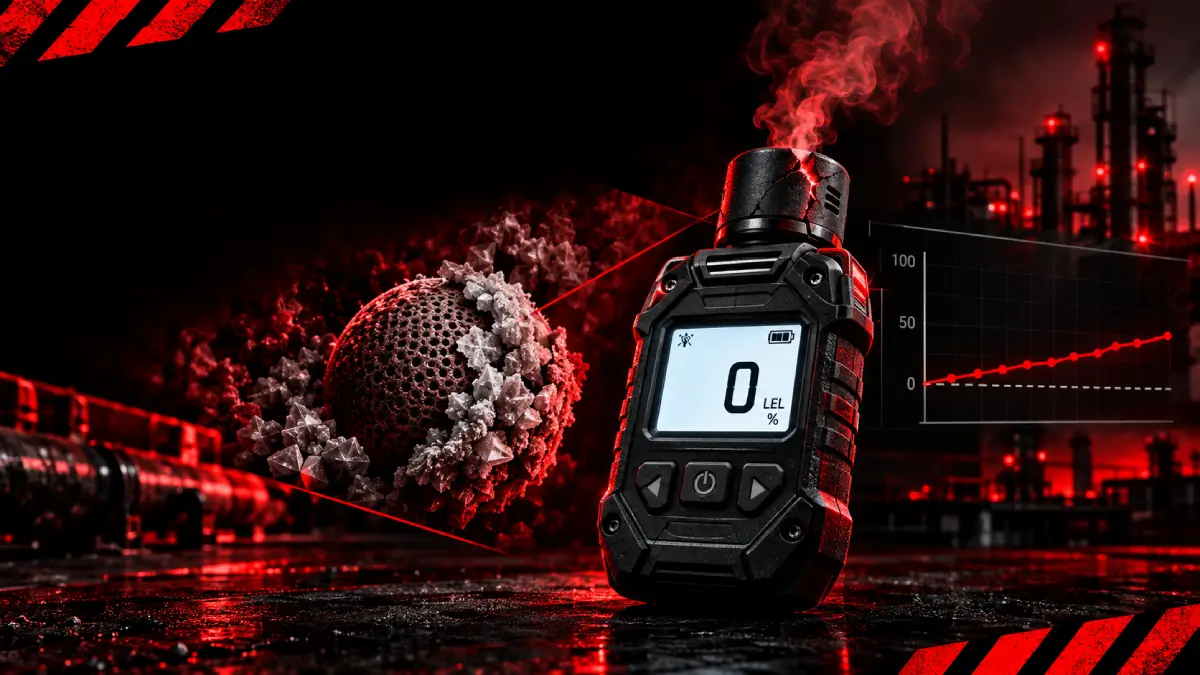
Catalytic bead LEL sensors are famously vulnerable to silicone vapors, lead compounds, and sulfides — chemicals that permanently poison the bead. The symptoms look exactly like a false alarm: sudden reading spikes, erratic behavior, then eventually a dead sensor showing an innocent zero.
04Environmental Extremes
Temperature swings, condensation, high humidity, and pressure changes all shift sensor output. A detector in direct sunlight on a hot rooftop behaves nothing like the one you calibrated in the morning. Condensation on a sensor membrane is a classic false-trip generator in washdown areas.
05Placement and Process Problems
Sometimes the alarm is not false — it is just unwelcome. Detectors mounted near steam vents, exhaust fans, hot flares, or loading bays see transient background puffs all day long. The reading is real; the location is wrong.
06The Electronics: EMI, Power, and Wiring
Variable frequency drives, welding activity, radio transmitters, and poor grounding can inject noise that a sensitive analog front-end happily converts into a gas reading. Water ingress into junction boxes and corroded terminals cause the same phantom spikes.
07Setpoints Set in a Meeting, Not in the Field
Alarm thresholds copied from a datasheet without accounting for normal background levels guarantee nuisance trips. If your facility's ambient background for a gas sits at 15% of the alarm level, every process upset becomes an evacuation.
The Real Cost of Crying Wolf
Every false alarm spends down the account of credibility. The first alarm empties the area. The tenth gets muted. And when a real leak arrives, the detector is screaming to an audience that stopped listening years ago. False alarm management is not an instrumentation chore — it is a safety-critical discipline.
False Alarm Reduction Checklist
- Log every alarm with date, sensor, reading, and confirmed root cause — trends reveal the offenders fast
- Verify sensors with gas at every bump test; check calibration certificates against actual certified gas
- Track sensor age and replace proactively at end-of-life, not after the third nuisance trip
- Audit placement annually against gas density, airflow, and new process equipment
- Review cross-sensitivity tables against your facility's full chemical inventory
- Inspect enclosures, cabling, and earthing wherever spikes correlate with electrical activity
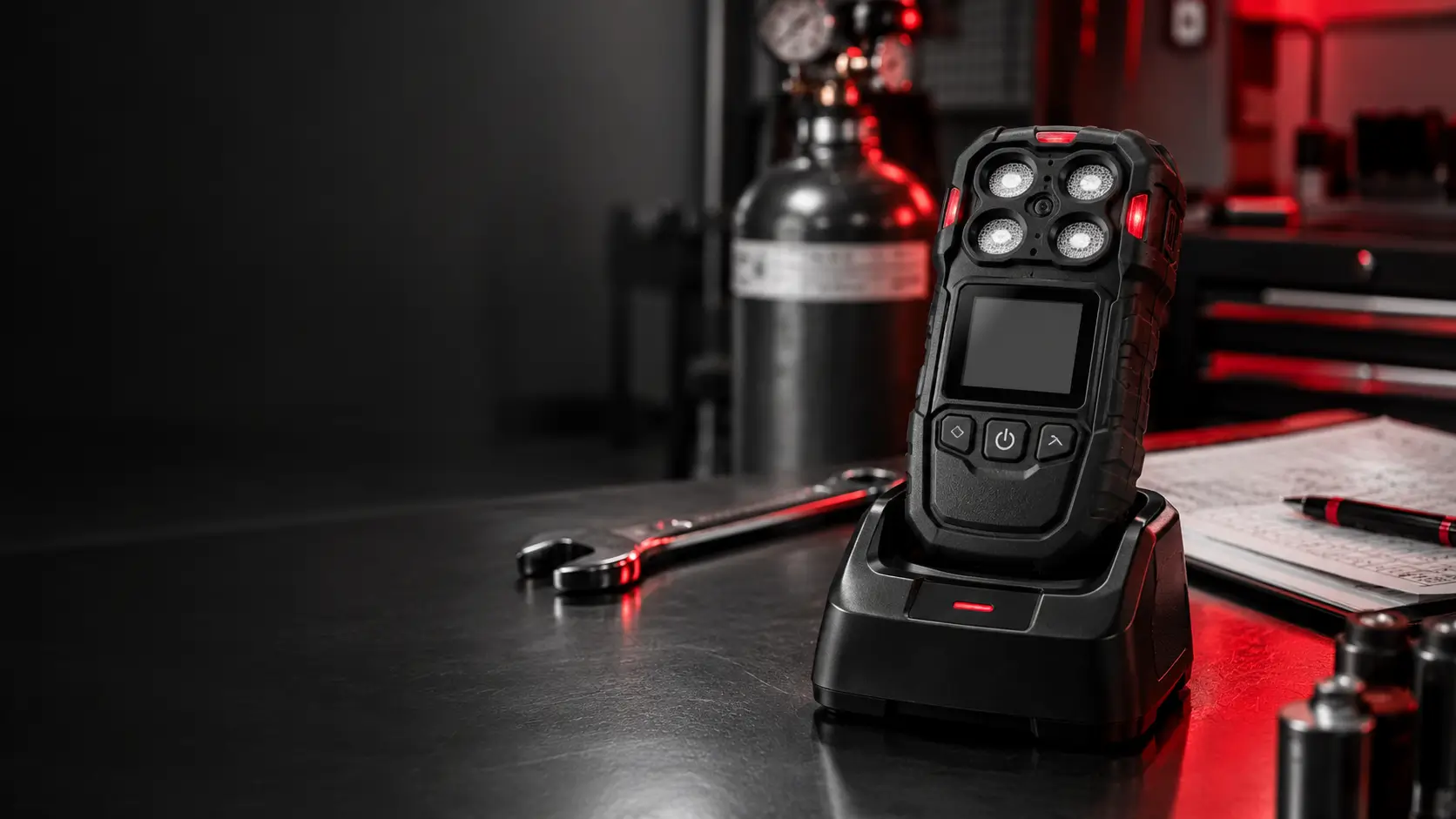
If your fleet is generating more silence-me-please moments than confidence, it may be time to look at the instruments themselves. Explore our range of portable and fixed gas detection solutions — including dock-ready multi-gas portables like the Senko SP-MGT that make routine verification a one-click affair.