


The Illusion Of Safety: Are Your Gas Detection Practices Putting Your Team At Risk?
Having a gas detector isn't the same as having a true gas detection strategy.
Too often, we see facilities equip their teams with portable monitors or install fixed systems, check the compliance box, and assume the job is done. But safety isn't a "set it and forget it" endeavor. Complacency, outdated practices, and misunderstandings about equipment certification are silent hazards that can be just as dangerous as the gases themselves.
Whether you are managing a fleet of portable devices or a sprawling network of fixed transmitters, here are the most critical gas detection mistakes we see in the field - and how to fix them.
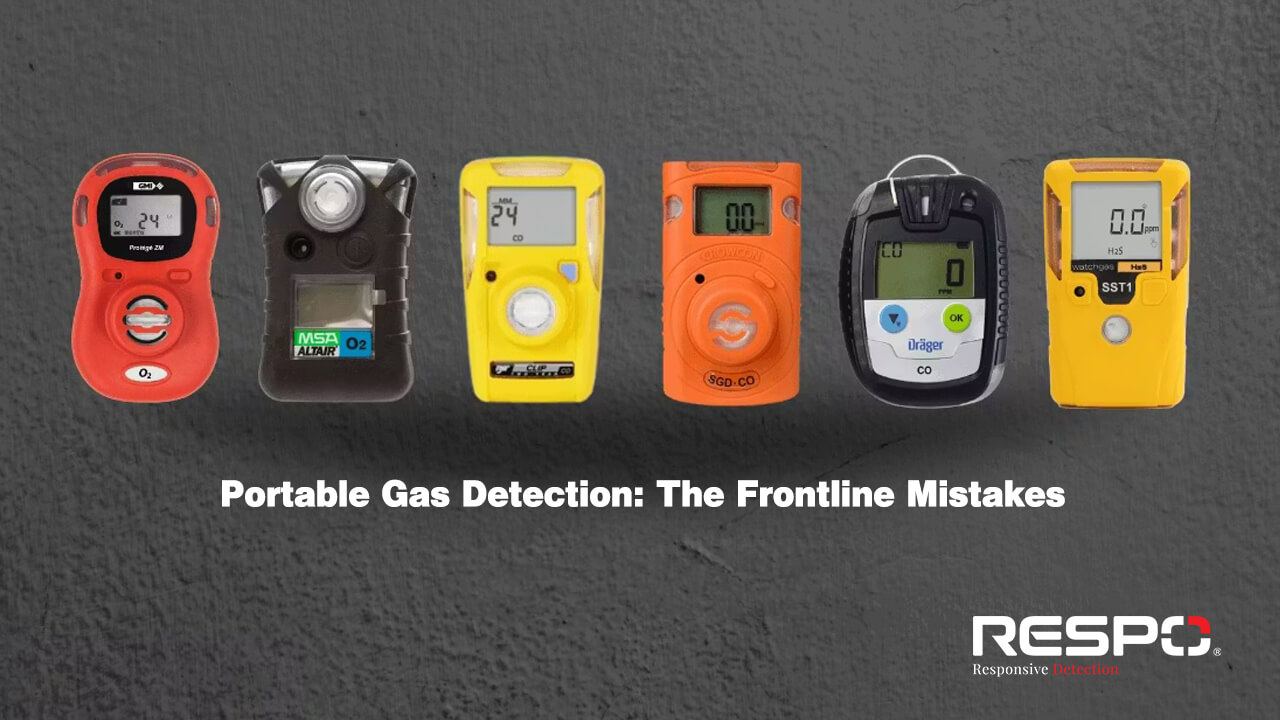
1. Portable Gas Detection: The Frontline Mistakes
Skipping the Bump Test
It is the oldest rule in the book, yet it is consistently ignored. A bump test is the only way to verify that a sensor actually responds to the target gas and that the alarms (audible, visual, and vibrating) trigger correctly. Without a daily bump test, a worker might as well be carrying a paperweight.
The Connectivity and Visibility Blind Spot
Traditional portable detectors rely solely on local alarms. If a worker goes down in a remote or loud part of a facility, a beeping device does nothing to alert the rescue team. This isolated architecture is a relic of the past. Modern safety demands connected ecosystems.
Ignoring the "Man-Down" Scenario
A gas leak isn't the only threat in hazardous areas; slips, falls, and medical emergencies are equally fatal. Relying on devices without built-in motion or man-down alerts leaves lone workers entirely vulnerable.
2. Fixed Gas Detection: Infrastructure Oversights
The "Certified Enclosure" Myth
This is a massive issue in the industry right now. Many buyers mistakenly believe that if an enclosure has a PESO or IECEx stamp, the entire finished product is certified for hazardous areas. This is dangerously false. A certified enclosure does not equal a certified product. At Respo Products, we recently put together a guide specifically to educate the market on this exact compliance trap. Always verify the certification of the complete assembly.
Poor Sensor Placement
Gases behave differently. Placing an H2S sensor near the ceiling or a Methane sensor on the floor renders them completely ineffective due to their vapor densities. Furthermore, placing sensors near heavy ventilation can dilute the sample before the detector ever registers a hazard.
Relying on Legacy Tech in Harsh Environments
Using older sensor technology means accepting high maintenance overhead. Traditional sensors suffer from massive drift over time, leading to false alarms or, worse, no alarms. Upgrading to solid-state systems - like dual-source NDIR for drift reduction or Molecular Property Spectrometers (MPS) - provides a much higher level of reliability.