


What Safety Managers Should Know Before Buying Portable Gas Monitors
Tough Conditions. Trusted Protection.
Buying a portable gas monitor looks simple on paper - pick the gases, check the price, place the order. In the field, that shortcut is exactly how plants end up with detectors that fail audits, frustrate technicians, or worse, give a false sense of safety in a hazardous area. After 30+ years protecting workers across Oil & Gas and heavy industry, here's what we tell every safety manager to check before the purchase order goes out.
1. Match the gases to the real hazard, not the catalogue
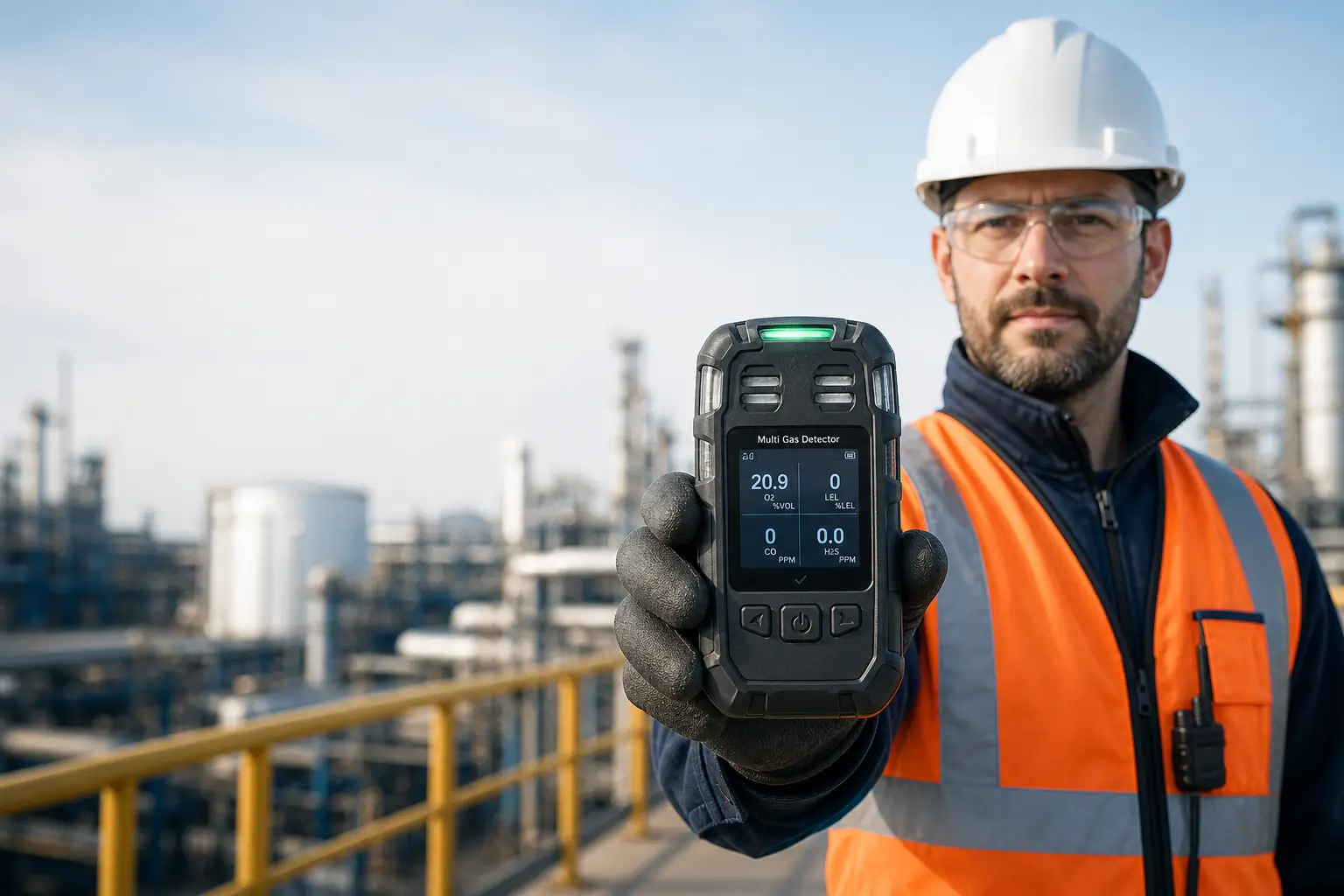
The most common mistake is buying a generic 4-gas unit (O2, LEL, CO, H2S) when the actual risk profile demands more - or different - sensors. Map your hazard first: confined-space entry, hydrocarbon leaks, sour gas service, or VOC/benzene exposure each call for a different configuration. A diffusion-type monitor suits personal monitoring, while a sampling (pump) type is essential for pre-entry testing of tanks and vessels. Buy for the hazard you have, not the one the brochure assumes.
2. Certification is not optional in hazardous areas
If the device enters a classified zone, it must be intrinsically safe and certified for it. Look for genuine IECEx and ATEXapprovals, and for the Indian market, PESO acceptance is non-negotiable. A word of caution we repeat often: a certified enclosure is not the same as a certified finished product. Ask for the actual certificate, verify the scope, and confirm it covers the device as you'll use it - not just a sub-component.
3. Sensor type drives accuracy, cost, and lifespan
Different sensing technologies have very different strengths. Electrochemical cells are excellent for toxics like H2S and CO but have a finite life. LEL detection for combustibles, oxygen sensing, and VOC/benzene detection (typically via PID) each behave differently with cross-sensitivity, drift, and recovery time. Understand the technology behind each channel so you can predict calibration frequency, replacement cost, and how the unit will behave in your specific atmosphere.
4. Survivability: IP rating, alarms, and battery
A monitor only protects if the worker can rely on it in the worst conditions. Prioritise a robust ingress rating (IP68 for true dust and water resistance), a genuinely loud audible alarm (look for ~100 dB), plus strong visual and vibrating alerts for noisy or high-glare environments. Then scrutinise battery life against a full shift with margin to spare - a detector that dies at hour seven is a liability.
5. Data, connectivity, and compliance records
Modern fleets live or die on data. Bluetooth/BLE connectivity and a companion app let you centralise readings, log exposure, and prove compliance during audits - far better than handwritten logbooks. For Indian PSU and regulated environments, also consider where that data is stored and whether the solution meets data-localisation expectations.
6. Total cost of ownership beats sticker price
The purchase price is the smallest number in the equation. Factor in calibration gas, bump-test and docking stations, sensor replacements, downtime, and the cost of training. A slightly pricier unit with cheaper consumables and longer sensor life almost always wins over a 3-5 year horizon.
7. The vendor matters as much as the device
A detector is a long-term relationship, not a one-time transaction. Ask whether the supplier offers consultation and customisation, installation and commissioning, operator training, and dependable after-sales support and AMC. When a sensor needs replacing or an audit needs documentation, a local, responsive partner is worth far more than the lowest bid.
A quick pre-purchase checklist
| Check | Ask Yourself |
|---|---|
| Hazard Match | Are the right gases and sample method (diffusion vs. pump) covered? |
| Certification | Are valid IECEx, ATEX, and PESO certifications available for the actual hazardous zone and the complete device? |
| Sensor Technology | Do I understand the calibration frequency, sensor lifespan, and replacement requirements? |
| Survivability | Does the device offer IP68 protection, loud audible alarms, visual indicators, vibration alerts, and full-shift battery life? |
| Data & Compliance | Does it support BLE/app-based data logging for audit trails, reporting, and regulatory compliance? |
| Total Cost of Ownership (TCO) | Have I considered the cost of calibration gas, sensor replacements, docking stations, training, and maintenance—not just the purchase price? |
| Support & Service | Are training, AMC (Annual Maintenance Contract), calibration support, and responsive after-sales service available? |
The Respo view
We built our business on the belief that safety equipment should be chosen with the same rigour as the assets it protects. From multi-gas and single-gas detectors to VOC and area monitoring, our approach is end-to-end: consultation, commissioning, training, and lifetime support - backed by 100+ turnkey projects and 500+ satisfied clients across IOCL, BPCL, HPCL, GAIL, ONGC and more.
If you're scoping your next fleet of portable monitors, talk to our team before you finalise the spec. We'll help you match the technology to your hazard - and your compliance obligations.
A quick pre-purchase checklist
| Check | Ask yourself |
|---|---|
| Hazard match | Are the right gases and sample method (diffusion vs. pump) covered? |
| Certification | Valid IECEx / ATEX / PESO for the actual zone and full device? |
| Sensor tech | Do I understand calibration frequency and sensor life? |
| Survivability | IP68? Loud + visual + vibrating alarms? Full-shift battery? |
| Data | BLE/app logging for audit trails and compliance? |
| TCO | Have I costed gas, sensors, docking, training – not just price? |
| Support | Training, AMC, and responsive after-sales in place? |