



Sensor Poisoning And Drift: What Every Maintenance Team Should Watch For
A gas detector never announces its own decline. It shows a confident zero right up until the moment it should not have. Poisoning and drift are the two quiet killers of detection reliability - and both leave fingerprints if you know where to look.
Every sensor in your fleet is dying. That is not melodrama - it is how gas sensing physics works. Electrochemical cells deplete their electrolyte, catalytic beads burn away their catalyst, and optical assemblies gather contamination. The question is never whether your sensors are degrading, but how fast, and whether your maintenance program can see it happening.
Poisoning and drift are related but fundamentally different failure modes - and confusing them leads to the wrong fix every time.
Poisoning
Sudden, often permanent loss of sensitivity caused by specific chemicals attacking the sensor. A poisoned sensor can look perfectly healthy on paper - calibrated, logged, in-date - and still be deaf to the gas it was bought to detect.
Fast · Often irreversibleDrift
Slow, gradual movement of the zero and span readings caused by ageing, environment, and exposure. Drift is predictable and correctable - until the day the correction range runs out and the sensor must retire.
Slow · Correctable, then fatal01Silicones: The Silent Assassin of Pellistor Sensors
Silicone greases, sealants, anti-foam agents, and lubricants release siloxane vapors that crack on the catalytic bead and coat it with an inert silica layer. Parts-per-billion concentrations can degrade a pellistor LEL sensor - and the damage is cumulative and permanent. A single maintenance campaign using the wrong silicone sealant near detector locations can quietly degrade an entire zone.
02Sulfides and Lead Compounds
Hydrogen sulfide and mercaptans poison catalytic beads by binding to active catalyst sites. Tetraethyl lead and other organolead compounds behave the same way. Sour service sites - refineries, gas processing, sewage treatment - should treat pellistor health as an active concern, not an annual checkbox.
03Electrolyte Contamination in EC Cells
Electrochemical cells are vulnerable in a different way: desiccation in hot, dry locations, electrolyte leakage, and chemical ingress all attack the cell from inside. Cross-sensitivity to interfering gases can also produce readings that look like drift but are actually contamination of the sensing chemistry.
04Temperature and Humidity Cycling
A detector mounted on an outdoor pipe rack lives through a daily thermal cycle its laboratory calibration never saw. Expansion, condensation, and humidity-driven membrane changes shift baselines seasonally. Detectors calibrated in a cool workshop then returned to a rooftop in summer can drift out of spec within weeks.
05Overexposure and Over-Range Events
Every major gas exposure stresses the sensor. An over-range event on an EC cell can consume electrolyte; a rich excursion on a catalytic bead can bake off catalyst material. Many teams return an over-ranged detector to service after a span check - but the cell may have aged years in that one event.
06The Ageing Clock Nobody Watches
Electrochemical cells have a defined service life - typically 1 to 3 years depending on chemistry and environment - that starts at manufacture, not at installation. A spare cell sitting in a storeroom for two years is already two years old. Catalytic beads and optical components age on their own curves too.
The Most Dangerous Failure Mode is a Quiet One
A dead sensor that throws an error code is annoying but safe. A poisoned or drifted sensor that still displays a plausible zero is the true hazard - it passes every visual check, sits confidently at 0, and reports nothing while the atmosphere degrades. This is why bump testing with real gas, not just a calibration sticker review, is the only verification that counts.
Your Detection Health Log
Five data points that expose poisoning and drift before they become blind spots.
| Log Entry | What It Reveals |
|---|---|
| Bump test response time | Lengthening response is the earliest signature of a bead or cell losing its edge |
| Span adjustment per cycle | A cell needing ever-larger corrections is drifting faster than its peers - investigate why |
| On-site zero vs workshop zero | The gap quantifies environmental stress at that mounting location |
| Alarm & over-range history | Correlates exposure events with later calibration anomalies on the same serial number |
| Sensor manufacture date | The real clock - not the commissioning date - governs remaining service life |
Maintenance Team Checklist
- Bump test with certified gas before every use - never trust a zero that has not faced real gas
- Review chemical introductions near detector locations: silicones, lead, sulfides, mercaptans
- Trend span gas readings between calibration cycles to catch accelerating drift early
- Treat every over-range event as a sensor health investigation, not just a work order closure
- Track sensor age from manufacture date in your CMMS, and schedule retirement before failure
- Verify spares inventory dates - a shelf-aged cell is not a fresh cell
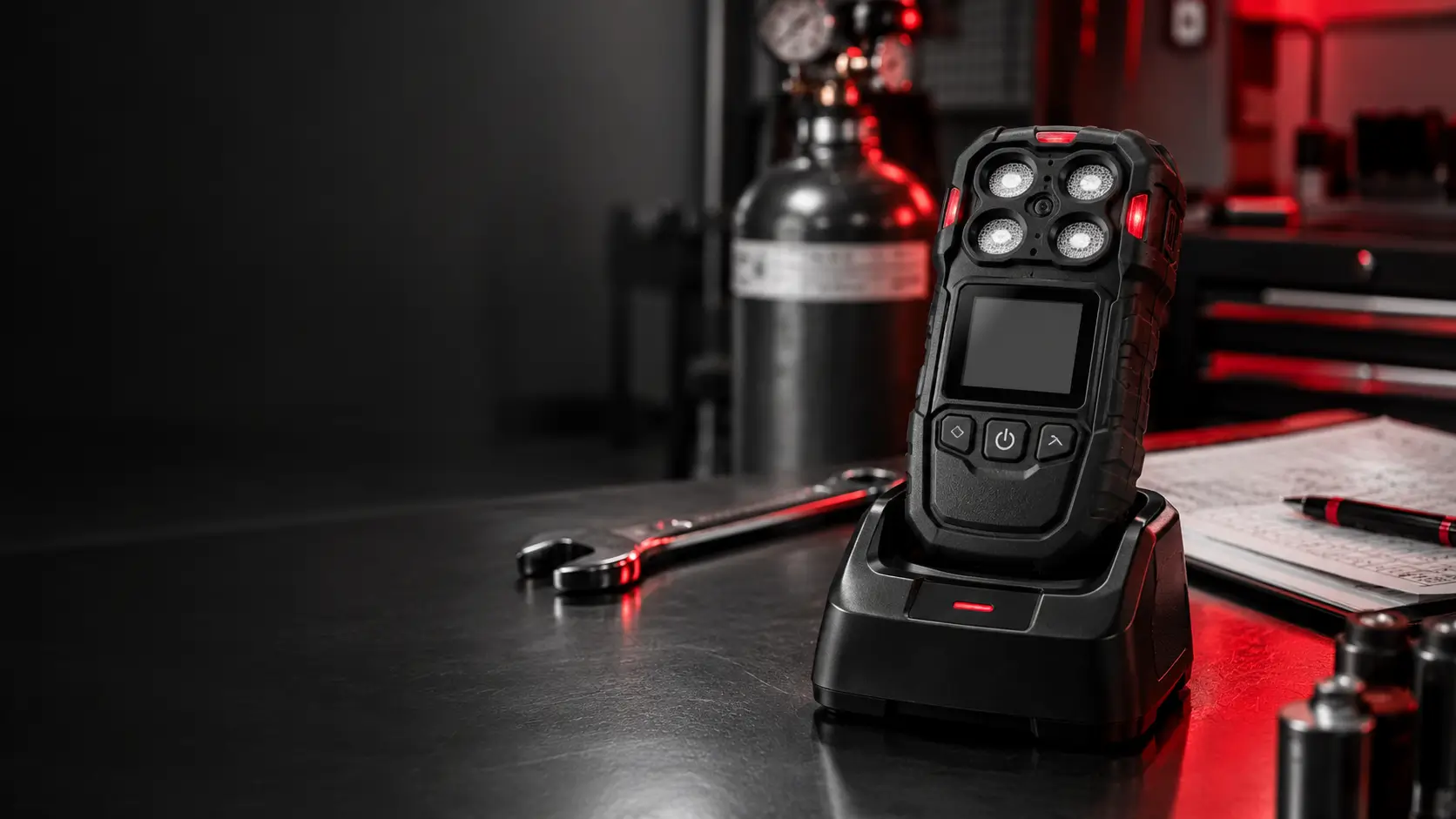
If your fleet keeps demanding attention between calibrations, it may be time to look at sensor technology itself. Explore our range of portable and fixed gas detection solutions, and dock-ready portables like the Senko SP-MGT that make routine verification part of the daily routine instead of a monthly scramble.