


METHANE DETECTION: PROTECTING PEOPLE, ASSETS, AND THE ENVIRONMENT
THE INVISIBLE THREAT HIDING IN PLAIN SIGHT
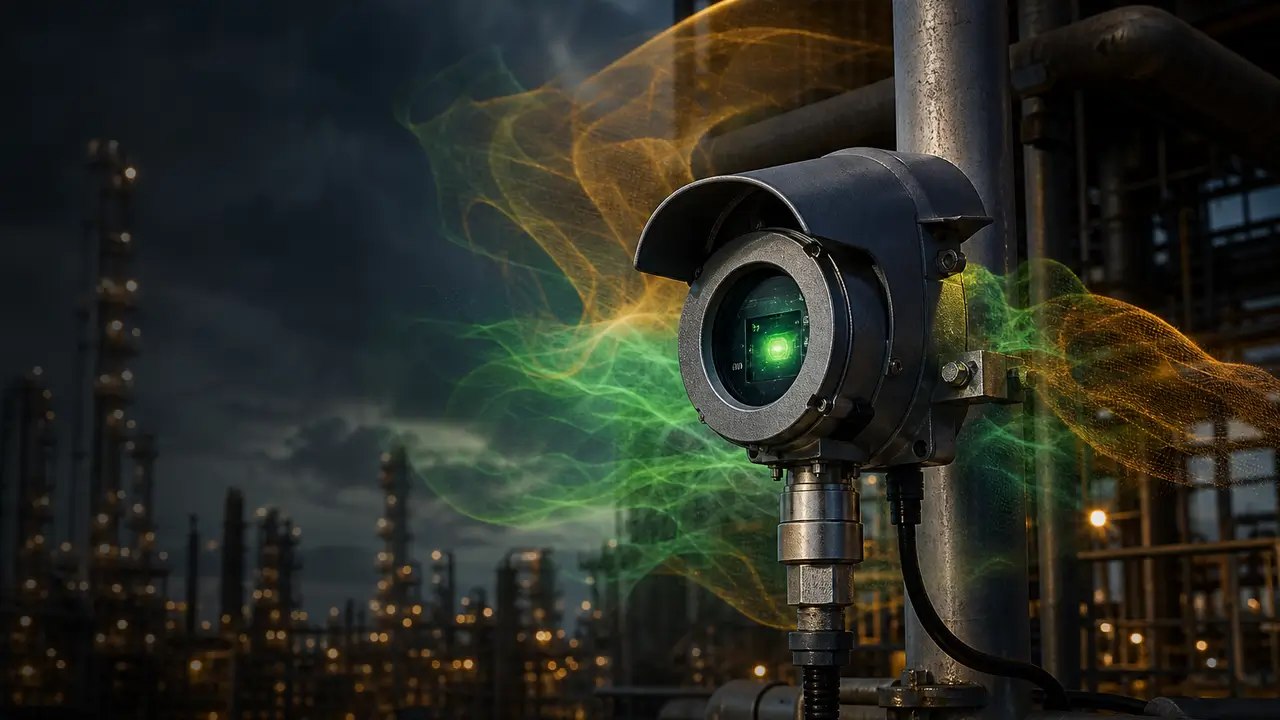
Methane is the primary component of natural gas, the fuel powering India's ambition to raise gas share from 6.2% to 15% of the energy basket by 2030. It is colourless, odourless, and lighter than air. Human senses cannot detect it at any concentration. And yet, a methane cloud in the wrong place at the wrong time can level a facility, end lives, and punch a hole in the atmosphere that takes decades to heal.
Methane has a global warming potential 80 times that of CO2 over a 20-year horizon, making it the second-largest contributor to anthropogenic climate change after carbon dioxide. The IEA estimates that global energy-related methane emissions are roughly 80% higher than what countries officially report. Every undetected leak is simultaneously a safety hazard, a financial loss, and an environmental liability.
This newsletter breaks down why methane detection is a three-dimensional challenge - protecting people, assets, and the environment - and how the right technology strategy turns an invisible threat into a managed risk.
WHY METHANE IS A THREE-DIMENSIONAL RISK
1. People: The Explosion Hazard
Methane forms flammable mixtures in air across a remarkably wide range: 5% to 15% by volume (the Lower and Upper Explosive Limits). A leak that reaches 5% LEL - just 0.25% volume concentration - is already in the danger zone. Because methane is lighter than air (vapour density ~0.55 relative to air), it rises and accumulates at ceilings, roof apexes, and the tops of enclosures - exactly where many standard sensor placements fail to reach.
The ignition energy required is low. A static spark, a hot surface, or an electrical arc is sufficient. In confined or poorly ventilated spaces, a small leak can build to an explosive concentration long before anyone is aware. The human cost of a methane explosion is measured in lives, injuries, and the long tail of trauma that follows.
2. Assets: The Financial Drain
Every cubic metre of methane that escapes is product lost. In city gas distribution networks, unaccounted-for gas (UFG) represents both direct revenue loss and a regulatory compliance problem. Fugitive emissions from valves, flanges, compressors, and pipeline joints erode the economics of gas infrastructure - and in India's evolving regulatory framework, they increasingly carry penalties.
Beyond the gas itself, a methane ignition event can destroy equipment, trigger shutdowns that last weeks, and generate insurance and liability costs that dwarf the value of the lost fuel. Detection is not just a safety investment; it is an asset protection strategy.
3. Environment: The Climate Multiplier
Methane is a potent short-lived climate pollutant. Over the 20 years after it reaches the atmosphere, it traps approximately 80 times more heat than an equivalent mass of CO2. Over a 100-year period, the figure is still 28 times. India's methane emissions were estimated at approximately 19.5 million tonnes in 2016, equivalent to 409 million tonnes of CO2 - a figure that has only grown since.
The world is paying attention. The IEA's Global Methane Tracker 2025 highlights the gap between reported and actual emissions. The EU has introduced its first-ever methane mitigation regulations for the energy sector. The US EPA has implemented new federal rules to curb methane leaks from gas pipelines. And in India, the PNGRB hosted a Capacity Building Workshop on Oil & Gas Methane Abatement in June 2026 - a clear signal that regulatory scrutiny of fugitive methane is intensifying.
KEY STATISTICS AT A GLANCE
- 80x: Warming power of methane vs CO2 over 20 years
- 5-15%: Methane explosive range in air (LEL to UEL)
- 80%: Gap between reported and actual energy-sector methane emissions (IEA)
DETECTION TECHNOLOGIES: CHOOSING THE RIGHT SENSOR FOR THE JOB
Not all methane sensors are created equal. The choice of technology determines accuracy, speed, reliability, maintenance burden, and - ultimately - whether your detection system actually catches the leak before it becomes an incident. Here is the practical breakdown of the three dominant technologies.
Catalytic (Pellistor)
How it works: Methane oxidises on a heated catalyst bead, producing a temperature change that the sensor converts to a signal.
Strengths: Broad combustible gas coverage; proven, well-understood technology; cost-effective for %LEL safety.
Limitations: Requires oxygen to function; susceptible to sensor poisoning (silicones, sulphur compounds); slower response (T90 ~30s); drifts over time, needs regular calibration.
NDIR (Non-Dispersive Infrared)
How it works: Infrared light at methane-specific absorption wavelengths passes through a measurement cavity. The detector measures how much IR is absorbed by the gas.
Strengths: Highly stable, minimal drift; immune to catalytic poisoning; oxygen-independent operation; fast response (T90 ~3s); long sensor life.
Limitations: Higher upfront cost than catalytic; optics can be affected by condensation or contamination (mitigated by heated optics); not suitable for hydrogen detection.
Laser (TDLAS)
How it works: A tunable diode laser is tuned to methane's specific absorption lines, providing highly selective, long-path or remote detection.
Strengths: Extremely high selectivity for methane; remote, non-contact measurement (up to 150m+); ultra-fast response (T90 < 0.05s); can detect leaks in inaccessible areas.
Limitations: Higher system complexity; requires line-of-sight to target; application-specific design.
KEY INSIGHT: In 2025, infrared sensors held approximately 38.4% of the methane sensor market compared to catalytic sensors at 29.6% - and the gap is widening as NDIR costs decrease and performance advantages become harder to ignore. For most new fixed-point methane installations, NDIR is now the default choice, with catalytic sensors retained for specific applications and laser/TDLAS reserved for remote and open-path scenarios.
THE REGULATORY LANDSCAPE: INDIA AND BEYOND
India: PNGRB and OISD
The Petroleum and Natural Gas Regulatory Board (PNGRB) regulates India's natural gas sector under the PNGRB Act, including the storage, transportation, and distribution of natural gas. The PNGRB T4S regulations mandate uniform technical, safety, and operational design principles, verified through third-party audit before commissioning. The OISD (Oil Industry Safety Directorate) provides the granular safety standards that govern gas detection requirements in oil and gas facilities.
In June 2026, the PNGRB hosted a Capacity Building Workshop on Oil & Gas Methane Abatement, bringing together regulators, operators, and technology providers to discuss methane emissions reduction across India's gas value chain. The government's push to raise natural gas share to 15% by 2030 makes methane leak detection and repair (LDAR) not just a safety practice but a national policy imperative.
Global: A Tightening Net
- EU Methane Regulations: The EU has introduced its first-ever methane emissions regulations for the energy sector, requiring both detection and quantification of emissions - not just reporting.
- US EPA Rules: New federal rules emphasise updating leak detection and repair requirements for gas pipelines, with advanced methane detection technologies including satellite monitoring, aerial surveys, and continuous sensors.
- IEA Global Methane Tracker: The IEA's 2025 tracker reveals that actual energy-related methane emissions are roughly 80% higher than officially reported, driving international pressure for mandatory monitoring.
The message is clear: methane detection is moving from a best-practice recommendation to a legal and regulatory requirement, and the technologies that satisfy tomorrow's compliance standards are the ones being specified today.
BUILDING A LAYERED METHANE DETECTION STRATEGY
No single sensor or technology covers every scenario. A robust methane detection programme layers technologies across the facility, each addressing a different failure mode:
- Fixed Point Detection (NDIR): Continuous monitoring at known leak sources - valve manifolds, compressor seals, flanges, metering stations. The first line of defence, integrated with the control system for automatic response.
- Remote Laser Detection: Handheld or mounted laser methane detectors for patrol surveys of pipelines, City Gas Distribution networks, and areas where personnel cannot safely approach. Non-contact measurement from up to 150 metres away.
- Wireless Detection Networks: Battery-powered, cellular-connected detectors for remote well pads, distributed pipeline sections, and locations where cabling is impractical or uneconomical. Real-time cloud monitoring with SMS and email alerts.
- Control & Integration: A centralised control panel that aggregates all detector inputs, drives alarms, and interfaces with the facility's safety instrumented system (SIS) for automated shutdown and ventilation response.
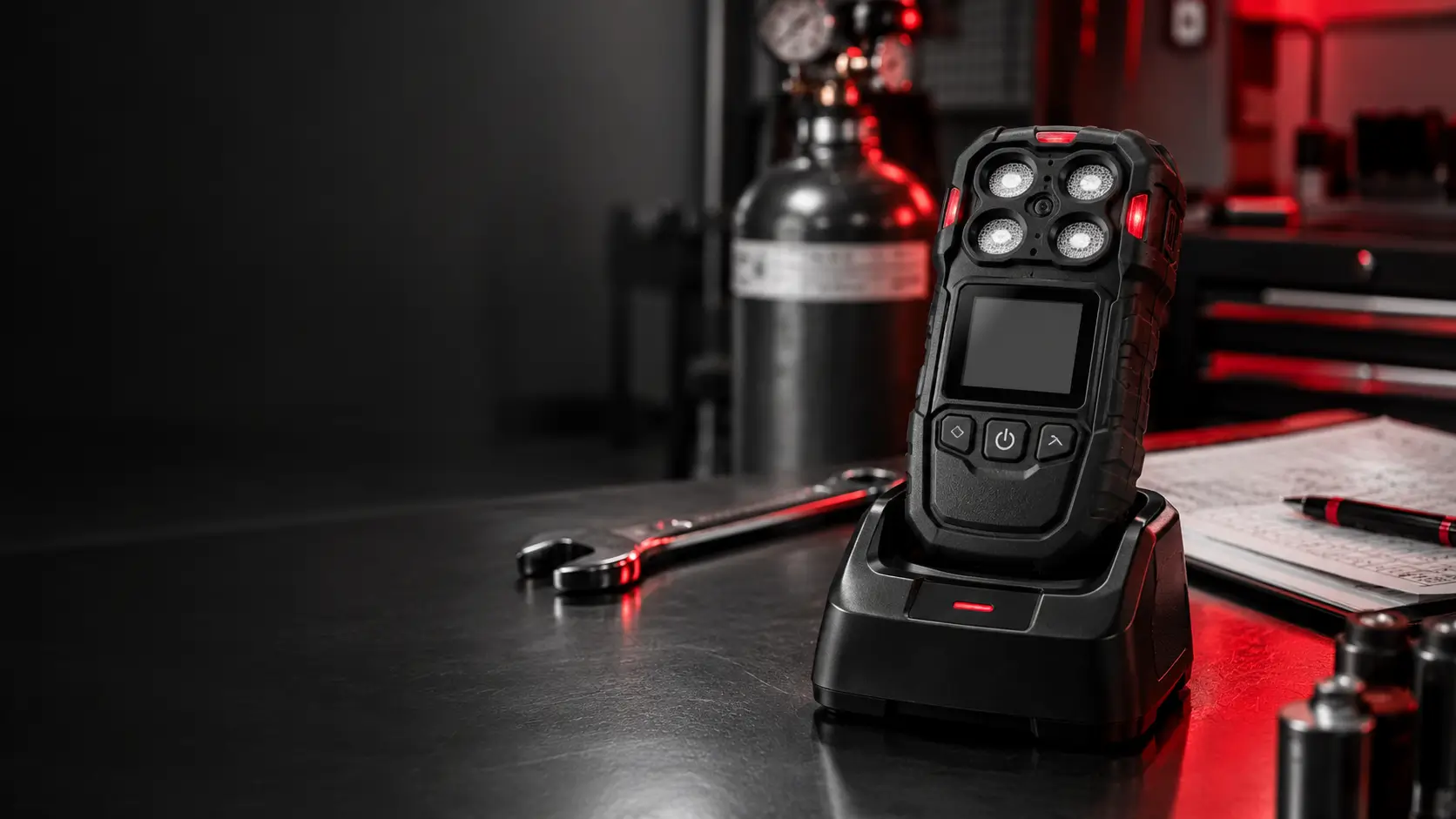
- Portable & Personal Monitors: For personnel entering confined spaces, conducting maintenance, or performing commissioning - because the person closest to the leak needs to know first.
PLACEMENT PRINCIPLE: Because methane is lighter than air, fixed detectors must be mounted high - at ceiling level, roof peaks, and the tops of enclosures. Position sensors within 1-2 metres of likely leak points. In complex airflow environments, multiple sensors always outperform a single "perfect" location.
HOW RESPO HELPS YOU DETECT METHANE EARLY
Respo brings 30+ years of gas detection experience and a technology-agnostic approach - the right sensor for each point, not one box for everything. Our methane detection portfolio spans fixed, remote, wireless, and control-room solutions, all certified for hazardous area deployment.
BS-03 | Fixed Gas Detector | NDIR
Double-beam NDIR technology with heated optics and temperature compensation for excellent stability and minimal drift. Dirty-optics warning maintains correct operation up to 70-80% contamination. Available with catalytic, electrochemical, and PID smart sensors for multi-gas flexibility.
Certifications: SIL-2, ATEX, PESO | T90 <= 3s | IP-66 | -40C to +70C
HRLD 300/600 | Handheld Laser Methane Detector
Advanced laser-based non-contact methane detector for remote leak surveying. Detects leaks from up to 150 metres away, enabling safe inspection of inaccessible areas. Ultra-fast response (T90 < 0.05s) with Bluetooth connectivity for data logging.
Certifications: ATEX Ex ia | 5 ppm.m sensitivity | 150m range | IP-66 | 10yr sensor life
remoREAD | Wireless Gas Detection System
Battery-powered wireless methane detector with methane infrared sensing. Transmits real-time readings, battery status, and alarm alerts via 4G to cloud, SMS, and email. Up to 32 nodes per gateway, 16 customisable SMS alert numbers. Solar panel option for extended deployment.
Certifications: SIL-2, ATEX, IP-67 | 4G Dual SIM | 15yr sensor life
GasGuard M16 | Gas Detection Control Panel
Modular, microprocessor-controlled panel accepting 1 to 16 channels in a single 3U 19-inch rack. Industry-standard 4-20mA inputs, 3 gas-level alarms per channel, individual LCD displays with bar-graph visualisation, and dual RS485/RS232 communication ports.
Certifications: SIL-2 | 16 channels | 4-20mA | Modbus RTU | Battery backup
Beyond products, Respo provides end-to-end services: consultation and customisation to identify the right detection strategy, professional installation and commissioning, training and knowledge sharing for your workforce, and after-sales support with AMC for uninterrupted protection.
THE TAKEAWAY
Methane detection is no longer a single-sensor, single-location problem. It is a layered, technology-agnostic discipline that protects people from explosions, assets from financial loss, and the environment from one of the most potent greenhouse gases on the planet.
The regulatory net is tightening - in India and globally. The facilities that get detection right today are the ones that will pass tomorrow's compliance audits, avoid tomorrow's incidents, and earn the trust of the communities in which they operate.
Detect early. Respond fast. Protect everything.