


How Area Monitoring Improves Site-Wide Gas Safety
Respo Products | Safety Insights
When a Worn Detector Isn't Enough
Personal gas detectors do one job brilliantly: they protect the person wearing them. But hazards rarely respect that boundary. A leak can pool in a trench, drift across a fenceline, or build up in a corner of the worksite long before anyone walks into it.
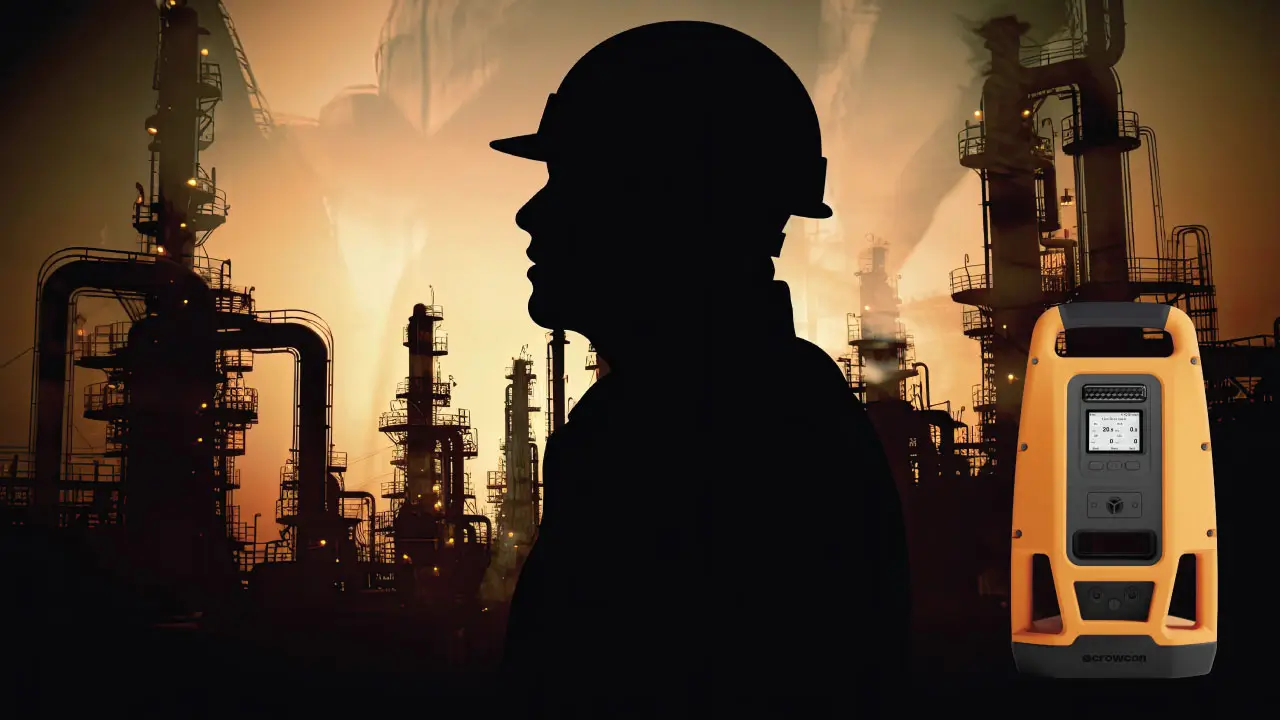
That gap is exactly what area monitoring is built to close. An area monitor is a rugged, stationary unit that continuously watches a defined zone, creating a buffer between your people and the hazard rather than waiting for a worker to step into it.
Personal vs. Area Monitoring: A Layered Approach
The two are not competitors; they are layers of the same safety net.
| Aspect | Personal Detector | Area Monitor |
|---|---|---|
| Protects | The individual wearing it | A zone, crew, or perimeter |
| Position | Moves with the worker | Fixed at the point of risk |
| Best for | Day-to-day exposure | Confined space, turnarounds, fenceline |
| Early warning | At the breathing zone | Before anyone enters the danger area |
Personal monitors confirm a worker's immediate exposure. Area monitors guard the space itself - and tell you where to place people in the first place.
Where Area Monitoring Earns Its Keep
Turnarounds and shutdowns. These are the highest-risk windows on any plant - crowded, fast-moving, and full of opened-up equipment. Portable area monitors give anywhere/anytime fenceline and zone coverage exactly where fixed detection is impractical.
Confined space entry. Continuous monitoring at the entry point lets crews enter, work, and exit without repeated stop-start delays for re-testing - safer and faster.
Hot work and maintenance. Temporary worksites need temporary protection that can be deployed in minutes and moved with the job.
Perimeter and fenceline. A ring of networked monitors flags a drifting cloud before it reaches the next crew or the site boundary.
The Site-Wide Advantage: Connected Coverage
The real leap forward is connectivity. When area monitors are wirelessly meshed and reporting to a central dashboard, a single alarm becomes shared situational awareness across the whole site. Supervisors see what gas, where, and when - in real time - so evacuation and response decisions are made on facts, not guesswork.
The payoff is threefold:
- Earlier warning - the hazard is caught at the source, not at the casualty.
- Faster, coordinated response - everyone sees the same live picture.
- Stronger compliance - event logs and dashboards turn safety into documented, auditable proof.
How Respo Helps
As a trusted gas detection partner evolving into a world-class Make-in-India manufacturer, Respo offers a complete site-wide safety architecture, not just individual boxes:
- DetectiveIQ Area Monitor - a configurable, transportable multi-gas area monitor for temporary worksites, with industry-leading battery life, modular sensors (up to 7 gases), IP66/IP68 protection, and mesh connectivity to a cloud dashboard.
- remoREAD Wireless Gas Detector - smart remote monitoring for hard-to-reach or hazardous zones, with no complex cabling.
- Fixed detectors and the GasGuard M16 control panel - for permanent, round-the-clock zone protection.
- End-to-end services - consultation and gas-mapping, installation and commissioning, training, and AMC/calibration support so the system stays reliable for years.
The Takeaway
Site-wide gas safety isn't a single device - it's a layered system. Personal monitors protect the worker. Area monitors protect the space. Connected together, they protect the whole site.