


"Heated Optics" In NDIR Gas Detectors: Engineering Reality Or Marketing Language?
A buyer's guide to one of the most misunderstood specifications in fixed gas detection.
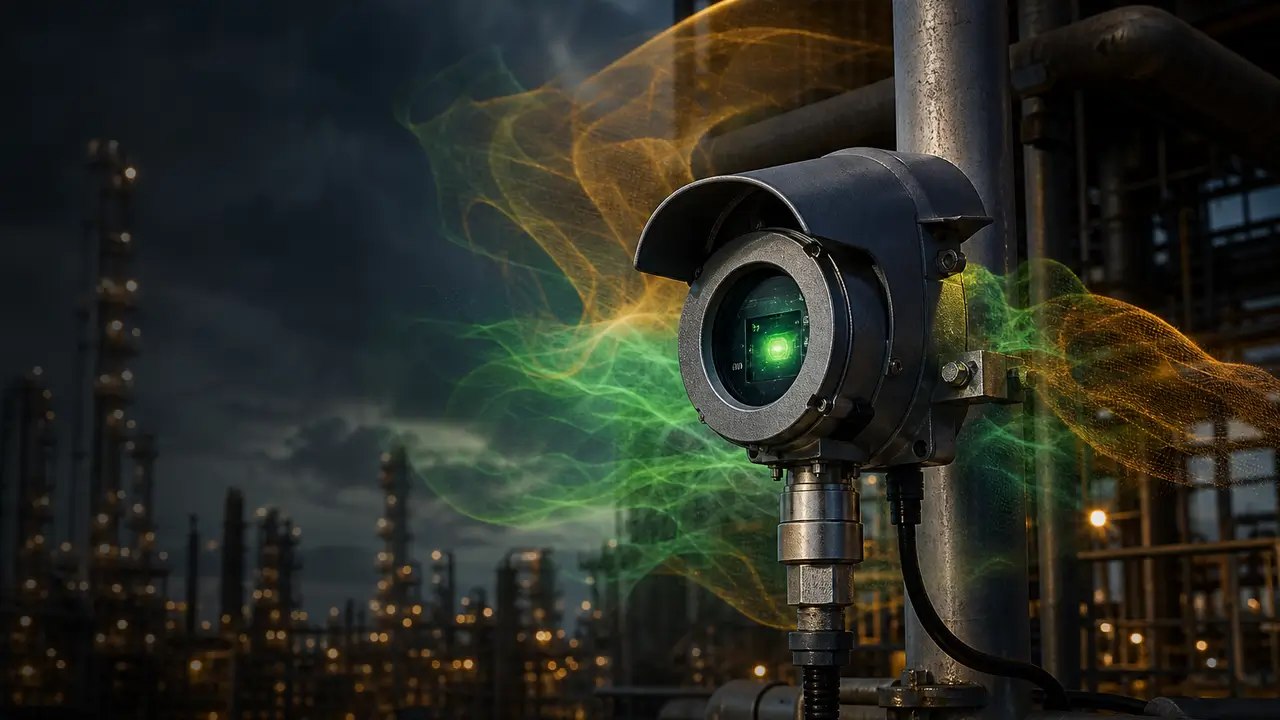
If you have evaluated fixed infrared (NDIR) gas detectors in the last few years, you have almost certainly encountered the phrase "heated optics" in a product brochure. It sounds reassuring. It implies the detector is protected against condensation, temperature swings, and the harsh realities of outdoor installation in a refinery or gas processing plant.
But here is the problem: two detectors sitting side by side can both claim "heated optics" while doing something fundamentally different inside. One may be running a purpose-engineered heated measurement cavity that actively holds the optical bench at a constant temperature. The other may be doing nothing more than a low-wattage trickle that takes the edge off mild condensation on a warm day in a controlled room.
As a buyer - or as the engineer specifying a detector for a PESO-approved hazardous area installation - you deserve to know the difference.
Why Optics Are the Heart of an NDIR Detector
An NDIR (Non-Dispersive Infrared) gas detector works by shining an infrared beam through a measurement cavity and measuring how much of that beam is absorbed by the target gas. The physics are elegant and reliable - but only if the optical components (the IR source, the mirrors, the windows, and the detector) remain clean, dry, and thermally stable.
When condensation forms on a mirror or window surface, the beam is scattered or absorbed by water droplets rather than the target gas. The detector reads a false alarm, or worse, reads zero when gas is actually present - a dangerous "nuisance fault" that erodes operator trust and leads to alarm fatigue.
When the optical bench cycles through large temperature swings, the responsivity of the IR detector and the emission spectrum of the source drift with temperature. The result is a slow, creeping measurement error that calibration can partially correct but never fully eliminate between service intervals.
This is why the thermal management of the optical bench is not a luxury feature. It is the core determinant of how accurately and reliably an NDIR detector performs across its claimed operating range.
The Spectrum: From "Trickle" to "True Heated Cuvette"
Not all heated optics implementations are equal. They sit on a spectrum, and power consumption is the most honest proxy for where a product falls on that scale.
Anti-Condensation Trickle (0.5 - 1.5 W)
This is the most common implementation. A small resistive element provides gentle warmth to raise the temperature of the cavity slightly above the ambient dew point under moderate conditions. It works adequately in temperate indoor environments. However, at low ambient temperatures (-20°C and below), the thermal losses through a stainless steel body are large enough that a 1 W heater provides negligible temperature lift. The cavity temperature essentially tracks ambient.
A key giveaway: detectors with trickle heaters typically require 10 to 20 minutes of warm-up time before reliable readings begin. The bench is warming up from cold ambient, not from a held thermal setpoint.
Continuous Drift-Free Heated Cuvette (4 - 7 W)
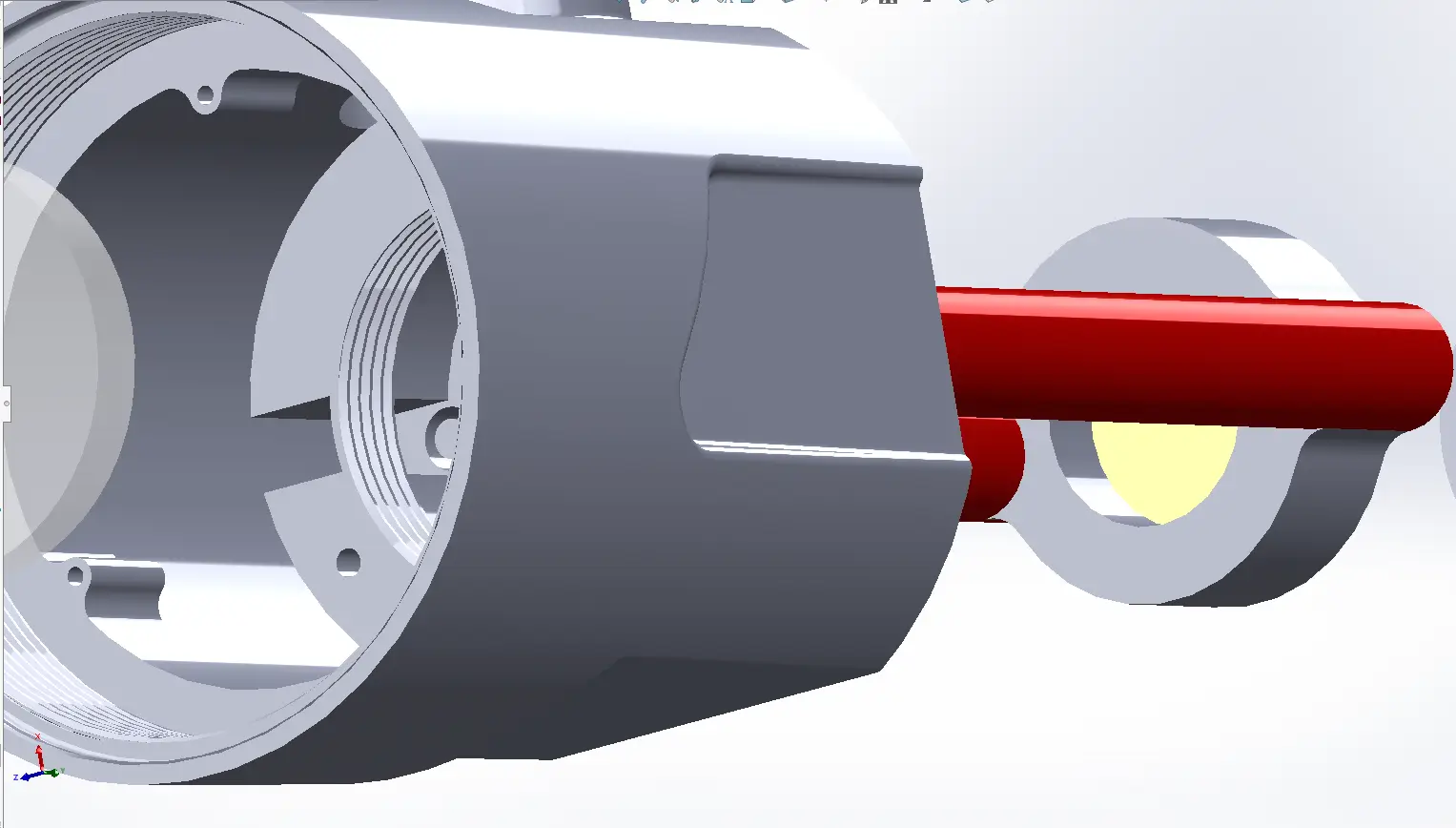
A fully engineered heated optical bench runs the heater continuously, maintaining the entire measurement cavity at a fixed, elevated temperature setpoint - regardless of ambient conditions. The benefit is not only condensation prevention. It eliminates thermally induced drift entirely, because the optical components are always operating at the same temperature as when they were calibrated.
The practical outcomes are significant: warm-up times drop to approximately 1 minute, calibration intervals can extend to 24 months, and there are no installation-orientation restrictions because the optics do not depend on gravity to keep moisture out.
The power difference is not a minor detail. It reflects an entirely different engineering philosophy.
Four Questions to Ask Before You Specify or Accept an NDIR Detector
1. What is the power consumption of the IR sensor node alone - with the heater active?
Ask for the electrical specification broken down by component, not just the total system draw. A genuine heated cuvette will show a heater contribution of 3 W or more. A trickle heater will show 1 to 1.5 W. If the vendor cannot separate these figures, that itself is an answer.
2. What is the warm-up time?
This is the single most revealing operational data point. A detector that requires 15 minutes to stabilise after power-on is telling you its optical bench is not thermally managed at a setpoint - it is warming from ambient. In a scenario where power is interrupted and restored at a cold outdoor installation, a 15-minute blind window is a real safety gap.
3. What are the installation orientation restrictions?
Check the installation manual carefully. If the vendor recommends - or requires - horizontal installation outdoors specifically to protect the internal optics from fouling, that is an admission that the optical protection is limited. A sealed, heated optical bench does not impose orientation restrictions related to optical contamination.
4. What is the optical mirror material, and is it specified?
For installations in sour gas environments (where H2S is present), this matters enormously. Standard silver-coated reflectors react with H2S to form silver sulphide (Ag2S), which is a dark, opaque compound. Over time, the mirror loses reflectivity, the signal degrades, and the detector drifts into a fault state - often without any early warning to the user. Chemically inert mirror coatings (such as gold) do not suffer this reaction. If the vendor cannot tell you the mirror material, ask why.
What This Means for Your Tender Specifications
When writing or reviewing technical specifications for NDIR fixed gas detectors, we recommend the following minimum clauses alongside the standard OISD-STD-117 / IEC 60079 requirements:
- Power consumption of the IR sensor module to be declared separately, with and without the optical heater active.
- Warm-up time to be declared at the minimum rated ambient temperature (-40°C where applicable), not at room temperature.
- Mirror / reflector material to be declared, with chemical compatibility certificate for H2S environments where applicable.
- Calibration interval to be backed by test data at the extremes of the rated temperature range, not at 23°C laboratory conditions.
- Installation orientation requirements related to optical protection to be declared explicitly.
These are not unreasonable requirements. Any manufacturer who has genuinely engineered their optical bench to the level they claim in their brochure will be able to answer them without hesitation.
A Note on SIL2 and Functional Safety
One more point worth flagging for instrumentation engineers involved in safety instrumented system (SIS) design: SIL2 certification on the transmitter or platform
Talk to Us
At Respo, we have spent three decades working alongside safety and instrumentation engineers at India's leading refineries, LPG terminals, cross-country gas pipelines, and petrochemical complexes. We carry these conversations into every product selection and specification we support.
If you are currently evaluating fixed NDIR gas detectors, reviewing a tender specification, or simply want a second opinion on a vendor's technical claims, we are happy to have that conversation - without any obligation.