



Catalytic Bead Vs Infrared Sensors: Which Technology Fits Your Application?
When it comes to detecting combustible gases in the Lower Explosive Limit (LEL) range, the two most widely deployed sensor technologies - catalytic bead (pellistor) and infrared (IR) - take fundamentally different approaches to the same problem. One burns gas to measure it. The other shines light through it. Both work. Neither is universally superior. The right choice depends entirely on your application.
Yet too often, procurement decisions are driven by catalog defaults rather than application analysis. A sensor that excels in a clean, oxygen-rich refinery control room may fail silently in a purged pipeline or a confined space. Understanding the physics behind each technology is the first step toward making an informed specification - and that is exactly what this newsletter breaks down.
01 The Catalytic Bead Sensor: Burn to Detect
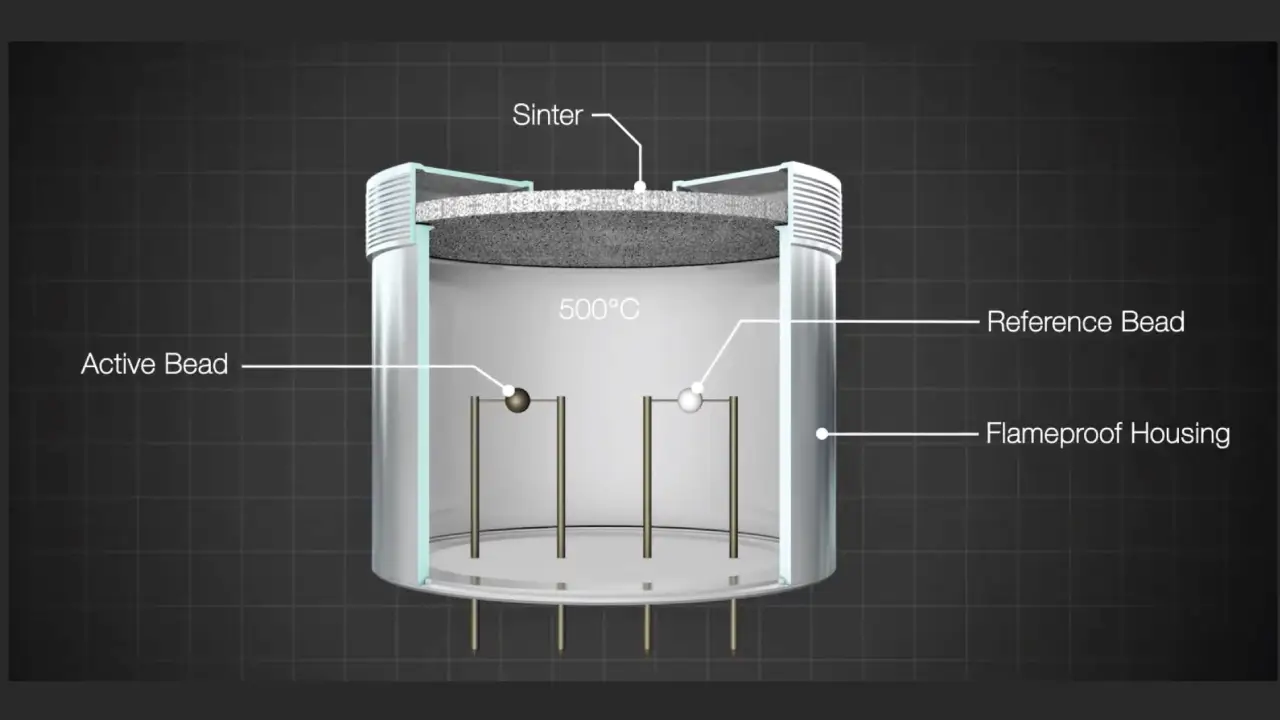
The catalytic bead sensor, also known as a pellistor, has been the workhorse of combustible gas detection for over five decades. Its operating principle is elegantly simple: two small ceramic beads - one active (coated with a catalyst), one inert (reference) - are heated to around 500°C and wired into a Wheatstone bridge circuit. When combustible gas enters the sensor, it oxidizes on the active bead's surface, raising its temperature and changing its electrical resistance. The bridge measures that imbalance and translates it into a %LEL reading.
Broad-spectrum detection. Pellistors respond to virtually any combustible gas or vapor - methane, propane, butane, hexane, ethylene, and critically, hydrogen (H₂) and acetylene (C₂H₂). This is their single greatest advantage over IR.
Proven and inexpensive. Decades of field data, well-understood failure modes, and low manufacturing cost make catalytic bead sensors the economical default for general-purpose LEL monitoring.
Oxygen-rich environments. In normal ambient air (20.9% O₂), pellistors are highly reliable and accurate across the full 0-100% LEL range.
Oxygen dependent. Catalytic combustion requires oxygen - typically a minimum of 10% vol. O₂. In inerted, purged, or oxygen-deficient atmospheres, the sensor simply stops working. Worse, it can read zero in a hazardous environment without flagging a fault.
Susceptible to poisoning. Silicones, lead compounds, sulfur compounds, and certain halogenated hydrocarbons can permanently damage the catalyst. A poisoned pellistor may appear functional during a bump test with low gas concentrations but fail to respond in a real leak.
Higher power consumption. The beads must be maintained at high temperature continuously, draining portable instrument batteries faster than IR equivalents - often cutting runtime by 40% or more.
Drift and burnout. Exposure to high gas concentrations can overheat and destroy the bead. Gradual drift requires frequent calibration. Typical sensor life is approximately 3-5 years.
02 The Infrared Sensor: Light, Not Fire
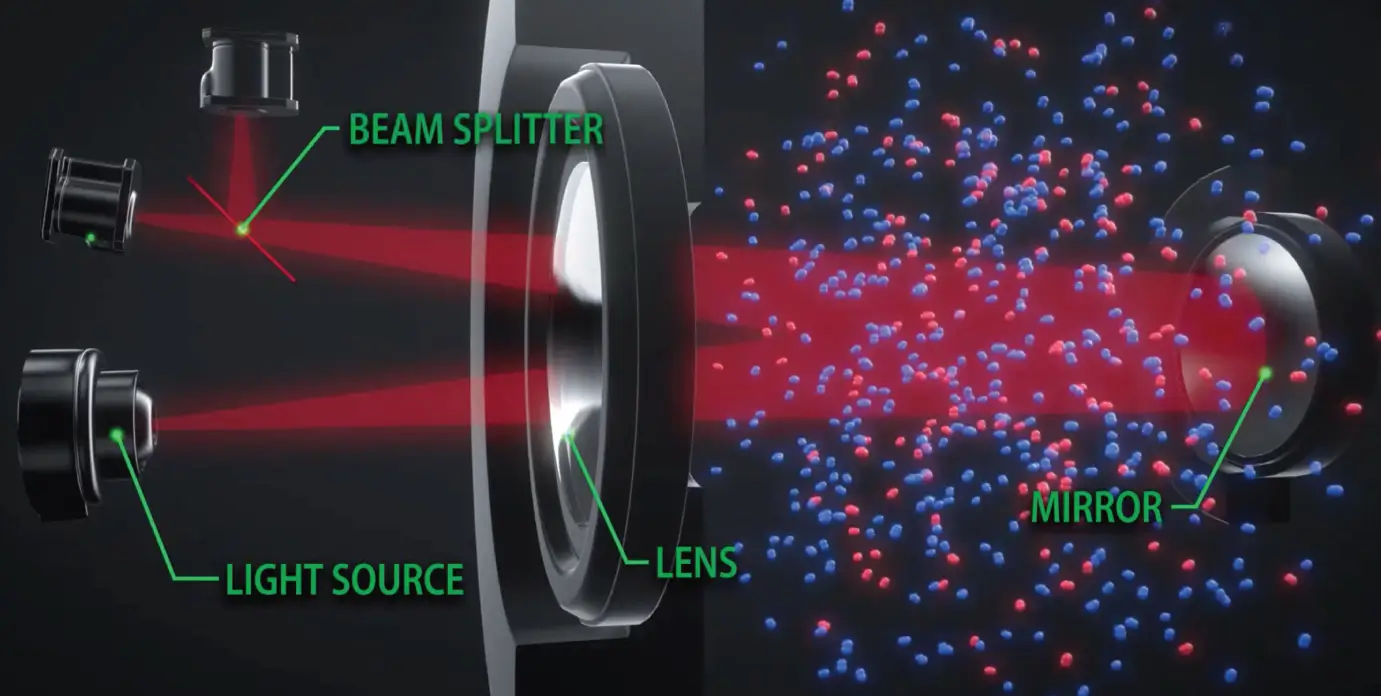
Infrared (IR) LEL sensors - most commonly implemented as Non-Dispersive Infrared (NDIR) detectors - take a fundamentally different approach. An IR source emits light at a specific wavelength (typically 3.3-3.4 µm for hydrocarbon detection). As gas passes through the optical path, it absorbs energy at that wavelength. A detector measures the reduction in light intensity and calculates gas concentration. A reference channel at a non-absorbing wavelength compensates for source aging, dirt, and humidity.
No oxygen required. IR sensors detect gas through optical absorption, not combustion. They work perfectly in inerted atmospheres, purged lines, vacuum environments, and oxygen-deficient confined spaces where pellistors are blind.
Immune to poisoning. Silicones, sulfur, lead - none of these affect an IR sensor. There is no catalyst to degrade.
Fail-safe design. If the light path is blocked or the source fails, the detector reports a fault rather than a false zero. This is a critical safety advantage over pellistors, which can fail to zero without any fault indication.
Lower power consumption. IR sensors draw significantly less power. In portable instruments, this can extend battery runtime by 60-80% - for example, a device running 18 hours on a pellistor may run 32 hours on an ultra-low-power IR sensor.
Longer life and stability. With no consumable catalyst and minimal drift, IR sensors typically last 8-10 years with less frequent calibration intervals.
Cannot detect hydrogen or acetylene. H₂ and C₂H₂ are symmetrical diatomic or linear molecules that do not absorb infrared light in the hydrocarbon band. An IR sensor reads zero in the presence of a hydrogen or acetylene leak. This is not a minor caveat - it is a potentially fatal gap if your hazard profile includes these gases.
Gas-specific. IR sensors are tuned to a specific absorption band. A sensor calibrated for methane may under-respond to propane or butane unless multi-gas calibration or gas-specific correction factors are applied.
Higher upfront cost. IR sensors are typically 2-3x more expensive than pellistors, though lower maintenance costs can offset this over the sensor's longer life.
Humidity and condensation sensitivity. Moving a cold instrument into a warm, humid environment can cause transient false readings as moisture enters the optical path. These are usually self-correcting within minutes but can trigger nuisance alarms.
03 Side-by-Side Comparison
| Parameter | Catalytic Bead (Pellistor) | Infrared (NDIR) |
|---|---|---|
| Operating Principle | Catalytic oxidation on heated bead | IR light absorption at specific wavelength |
| Oxygen Required | ✗ Yes (min ~10% vol) | ✓ No - works in inert atmospheres |
| Detects Hydrogen (H₂) | ✓ Yes | ✗ No - H₂ does not absorb IR |
| Detects Acetylene (C₂H₂) | ✓ Yes | ✗ No |
| Broad-Spectrum (All Flammables) | ✓ Yes - responds to all combustible gases | ~ Only gases absorbing in target IR band |
| Poisoning Risk | ✗ High - silicones, sulfur, lead | ✓ Immune to catalyst poisons |
| Fail-Safe Behavior | ✗ May fail to zero without fault | ✓ Reports fault on source/path failure |
| Power Consumption | ✗ High (heated beads) | ✓ Low - 60-80% longer battery life |
| Typical Sensor Life | 3-5 years | 8-10 years |
| Calibration Frequency | More frequent (drift) | Less frequent (stable) |
| Upfront Cost | Lower | 2-3x higher |
| High Concentration Exposure | ✗ Can burn out the bead | ✓ Tolerates high concentrations |
| Humidity Sensitivity | Low | ~ Transient readings possible |
Critical Insight: The most dangerous specification error is deploying an IR sensor in an environment where hydrogen or acetylene may be present. IR will read zero. The gas is there. The sensor will not see it. Always map your hazard profile before choosing a technology.
04 The Decision Framework
There is no universal winner. The correct sensor is the one matched to your specific hazard profile, environmental conditions, and operational constraints. Use this framework to guide your specification:
Choose Catalytic Bead When...
Pellistor is the right pick
- Hydrogen (H₂) or acetylene (C₂H₂) are primary or possible hazards
- The environment always has adequate oxygen (above 10% vol)
- The atmosphere is clean - no silicones, sulfur compounds, or lead exposure
- Budget constraints favor lower upfront sensor cost
- Broad-spectrum detection of unknown or mixed combustible gases is needed
- Portable instruments with frequent charging are acceptable
IR is the right pick
- The environment may be oxygen-deficient or inerted (purged lines, nitrogen-blanketed tanks)
- Catalyst poisons are present (silicone seals, lubricants, sulfur-rich process streams)
- Hydrogen and acetylene are definitively NOT part of the hazard profile
- Long unattended deployments with minimal maintenance are required
- Extended battery life is critical for portable instruments
- Fail-safe fault reporting is a mandatory safety requirement
- High gas concentrations are possible (no burnout risk)
05 Real-World Scenarios
Refinery Process Area (Methane + Hydrogen)
A catalytic reforming unit may have both methane and hydrogen present. An IR sensor would detect the methane but miss the hydrogen entirely. Choose catalytic bead - but ensure the area is oxygen-rich and free of silicone-containing sealants.
Natural Gas Pipeline (Methane Only, Purged Sections)
Pipeline maintenance often involves nitrogen purging. A pellistor would go blind during purge operations. Choose infrared - it will continue detecting methane through the purge and into startup.
Confined Space Entry (Unknown Atmosphere)
Confined spaces may contain any combination of gases, potentially including hydrogen from battery charging or welding gas (acetylene). The atmosphere may also be oxygen-deficient. This is the most dangerous scenario for a wrong choice. A catalytic bead sensor covers all flammable gases but needs oxygen. An IR sensor works without oxygen but misses H₂ and C₂H₂. The safest approach: use both technologies in a multi-sensor instrument, or ensure the confined space is ventilated to restore oxygen before relying on a pellistor.
Offshore Platform (Harsh, Humid, Silicone-Rich)
Offshore environments frequently use silicone-based sealants and lubricants. Humidity is constantly high. If the target gas is methane or a hydrocarbon (not H₂), choose infrared for its poison immunity and humidity tolerance.
Key Takeaways
1. Catalytic bead sensors detect ALL flammable gases including hydrogen and acetylene, but require oxygen and are vulnerable to poisoning.
2. Infrared sensors work without oxygen, resist poisons, last longer, and draw less power - but cannot detect hydrogen or acetylene.
3. The single most dangerous mistake is deploying IR where H₂ or C₂H₂ may be present. It will read zero. Always map your hazard profile first.
4. When in doubt, or when the hazard profile is mixed, a dual-technology or multi-sensor approach provides the most robust protection.