


Ammonia Gas Detection: Safety Priorities For Refrigeration And Process Plants
On 21 June 2026, a catastrophic ammonia leak at a seafood processing factory in Periyapalayam, Tiruvallur district, Tamil Nadu killed at least nine workers and hospitalised over 70. The death toll climbed in the days that followed. The owners were arrested. The facility processed shrimp, fish, and other products destined for export - and its refrigeration system turned lethal in minutes.
This was not an isolated event. In November 2023, a separate ammonia leak at a seafood export unit near Chennai port killed one worker and injured three. Globally, the U.S. Chemical Safety Board's final report on a July 2024 ammonia release at a Cuisine Solutions facility in Sterling, Virginia documented dozens of injured workers and "critical deficiencies in the facility's safety systems." A 2025 industry incident analysis ranked ammonia leaks among the top five safety risks in refrigeration operations.
The pattern is consistent: equipment failure, seal and gasket degradation, corrosion, and faulty pressure relief account for the largest share of ammonia refrigeration incidents - roughly 36%, according to industry case histories. These are not freak accidents. They are predictable failures of detection, maintenance, and design.
After 30+ years protecting workers across Oil & Gas and heavy industry, here is what we tell every plant manager, safety officer, and procurement leader responsible for ammonia-handling facilities.
1. Understand the hazard - ammonia kills at concentrations you cannot smell reliably
Ammonia (NH3) is a colourless, corrosive, alkaline gas with a sharp, suffocating odour. The human nose can detect it at concentrations as low as 5 ppm - but olfactory fatigue sets in quickly. Within minutes of exposure, the nose adapts, and a worker can no longer reliably judge whether concentration is rising. Relying on smell is not a safety strategy. It is a gamble.
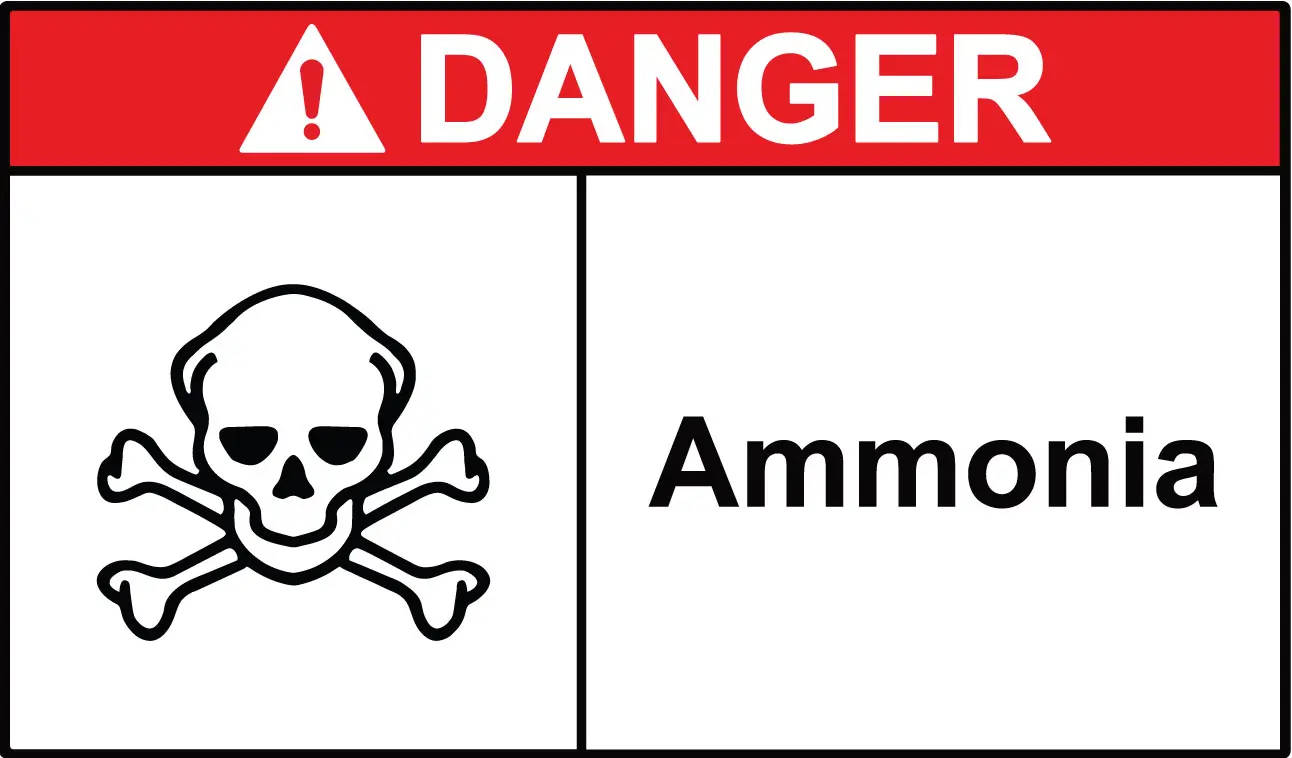
The exposure thresholds tell the story:Ammonia.jpg
| Limit | Value | Source |
|---|---|---|
| Odour threshold | ~5 ppm | NIOSH / NIH |
| ACGIH TLV-TWA | 25 ppm (8-hour) | ACGIH |
| NIOSH REL-TWA | 25 ppm (8-hour) | CDC/NIOSH |
| NIOSH REL-STEL | 35 ppm (15-min) | CDC/NIOSH |
| OSHA PEL-TWA | 50 ppm (8-hour) | OSHA |
| IDLH | 300 ppm | NIOSH |
| Potentially fatal | 5,000-10,000 ppm | NIOSH |
Here is the critical point that is often misunderstood: ammonia is toxic at 300 ppm (IDLH) but its Lower Explosive Limit (LEL) is 15% - that is 150,000 ppm. The toxic threshold is 500 times lower than the flammable threshold. By the time ammonia reaches a concentration where fire or explosion is a concern, every person in the facility would already be dead from poisoning. This means the entire safety case for ammonia detection is about toxic-level monitoring in the low ppm range - not LEL detection, not explosion prevention. Any detection strategy that focuses on the flammable range for ammonia has misunderstood the hazard.
Ammonia is also lighter than air (vapour density 0.6 relative to air), which means it rises and accumulates near ceilings in enclosed spaces - exactly where compressors, valves, and piping connections are concentrated in a machinery room.
2. Choose the right sensor technology - and it is not what you might think
Because ammonia's danger is overwhelmingly toxic, not flammable, the sensor selection must be optimised for low-ppm accuracy. This immediately rules out two technologies that are commonly - and wrongly - specified for ammonia.
Catalytic bead sensors are the wrong tool. Catalytic bead (pellistor) sensors are designed for combustible gas detection at LEL concentrations. They work by burning the target gas on a heated ceramic bead and measuring the resistance change. For ammonia, this is irrelevant: the LEL is 150,000 ppm, but the IDLH is 300 ppm. A catalytic bead sensor will not alarm at the concentrations that actually kill workers. Specifying a catalytic bead sensor for ammonia is like installing a smoke detector in a room full of carbon monoxide.
IR sensors configured for LEL detection are equally misplaced. Infrared sensors tuned for the ammonia LEL range (percent-level) suffer from the same fundamental mismatch - they are looking for a hazard that arrives 500 times later than the one that actually kills. That said, IR technology itself is not wrong for ammonia. IR sensors configured for low-ppm toxic-range detection can be excellent in harsh environments where electrochemical sensors fail - extreme cold, high humidity, or corrosive atmospheres. The key is the detection range: the sensor must be specified for 0-100 ppm or 0-250 ppm toxic monitoring, not 0-100% LEL.
The technologies that actually matter for ammonia safety:
Electrochemical (EC) sensors are the workhorse for ammonia toxic detection below 1,000 ppm. They work by allowing NH3 to diffuse through a membrane into an electrolyte, where a chemical reaction generates a current proportional to gas concentration. They offer high sensitivity at the ppm levels where ammonia is dangerous, fast response times, and low power consumption - making them ideal for both fixed and portable monitors. Their limitations: finite sensor life (typically 1-2 years), cross-sensitivity to other chemical fumes (cleaning solvents, amines), and vulnerability to extreme temperatures. An EC sensor installed inside a blast freezer will fail when the electrolyte freezes.
Solid-state / Metal Oxide Semiconductor (MOS) sensors use a heated metal oxide surface whose electrical resistance changes when ammonia contacts it. These sensors are robust, have long operational lifespans, and tolerate aggressive, corrosive environments well - a significant advantage for ammonia service, which attacks many sensor materials. They consume more power (the sensing element must stay heated) and can be slower to respond than EC types, but their durability in ammonia atmospheres makes them a strong candidate for fixed machinery-room installations.
Infrared (IR) sensors - toxic range are the correct choice where EC sensors cannot survive: cold storage areas, outdoor installations, and high-humidity process zones. When specified for low-ppm detection (not LEL), IR sensors offer superior stability, immunity to cross-sensitivity, and longer calibration intervals. They are more expensive, but in environments where sensor failure is not an option, they earn their cost.
The practical takeaway: for ammonia, the detection range is 0-250 ppm, not 0-100% LEL. Choose EC for standard installations, MOS for aggressive environments, and IR (toxic-range) for extreme conditions. Do not specify catalytic bead or LEL-range IR sensors for ammonia - they are solving a problem that does not exist.
3. Placement is everything - and the standard is specific
A perfectly specified sensor in the wrong location is useless. The Industrial Refrigeration Consortium (IRC) and IIAR 2-2021 standards provide clear guidance:
-
Proximity: Sensors should be located within 30 feet (approximately 9 metres) of each potential leak source - compressors, valves, flanges, and pressure relief discharge points.
-
Height: Mount in the breathing zone, approximately 5 feet (1.5 metres) off the floor. Because ammonia is lighter than air, ceiling-mounted sensors alone may miss ground-level leaks in the early stage before the gas rises.
-
Redundancy: IIAR 2-2021 raised the minimum number of low-range (25-150 ppm) detectors in compressor rooms from one to two. For engine rooms up to 4,000 sq ft, the standard calls for two 0-250 ppm sensors for complete coverage and redundancy.
-
Non-machinery rooms: IIAR 2-2021 also extended detection requirements to packaged ammonia systems and non-machinery spaces where ammonia piping or equipment is present.
In practice, the most common placement errors we see are: single-sensor installations where the standard requires two, sensors mounted too high (catching only late-stage rising gas), and sensors placed in dead-air zones where airflow patterns never carry leaked gas to the detector. A proper placement study - mapping airflow, leak sources, and occupancy patterns - is not optional. It is engineering.
4. Alarm setpoints must reflect real physiology, not arbitrary numbers
Alarm thresholds should be tied to the physiological effects of ammonia exposure, not rounded-off numbers that look tidy on a spec sheet. A defensible alarm strategy for a refrigeration machinery room:
-
Low alarm (25-35 ppm): At the NIOSH REL-TWA / ACGIH TLV-TWA level. This is the "investigate and ventilate" threshold - a leak is developing, and action is needed before exposure limits are exceeded.
-
High alarm (150 ppm): Well above the STEL but well below IDLH. This triggers evacuation of the machinery room, automatic shutdown of non-essential equipment, and activation of emergency ventilation.
-
IDLH alarm (300 ppm): Immediate danger to life. This level demands full evacuation, emergency response activation, and must not be reachable under normal operating conditions.
The alarm system must be integrated with ventilation controls, machinery shutdown interlocks, and notification systems - not just a siren on a wall. A detector that only flashes a light in an unoccupied machinery room at 2 AM has failed before it was installed.
5. Calibration and maintenance: the silent failure
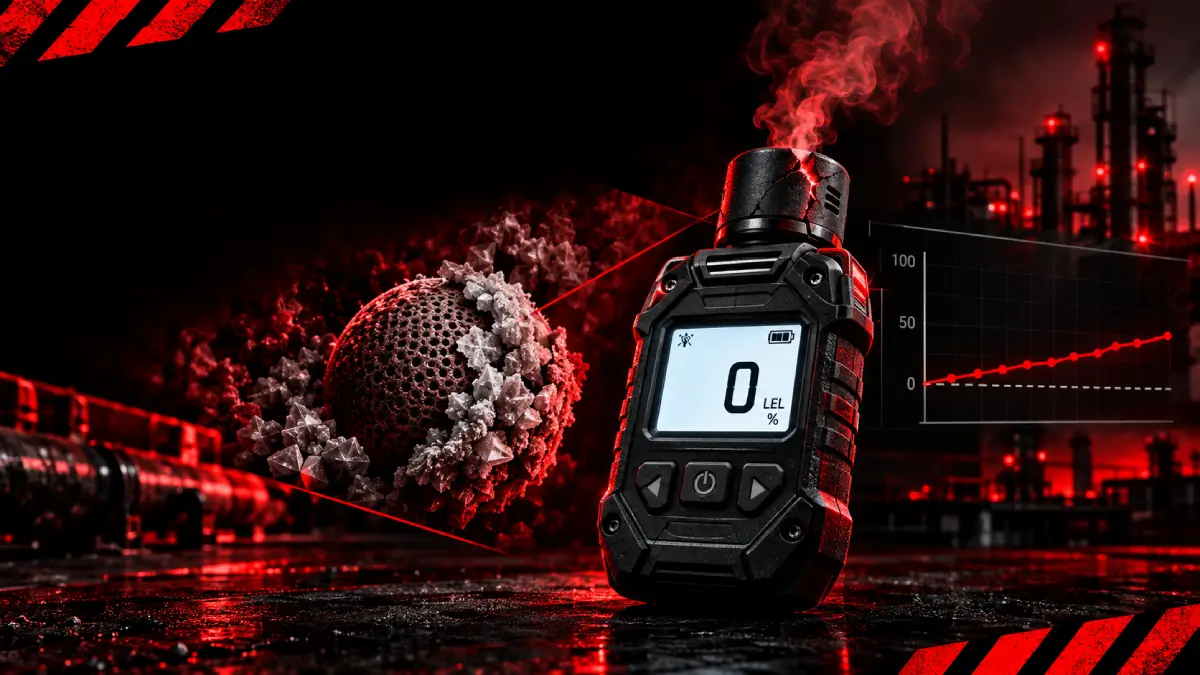
The most dangerous gas detector is one that reads zero because its sensor is dead. Ammonia sensors - particularly electrochemical types - drift over time. Without regular calibration with certified NH3 gas, a sensor can under-read by 30% or more while displaying a confident "0 ppm" on the controller.
Recommended practices:
-
Bump test with certified gas before any critical period (shift start, pre-entry, after long idle periods).
-
Full calibration every 3-6 months for fixed EC sensors, or per manufacturer specification - whichever is more frequent.
-
Sensor replacement on a preventive schedule (typically 12-24 months for EC, longer for MOS and IR), not a reactive one.
-
Calibration records maintained for audit and regulatory compliance. If you cannot prove the detector was working, the law assumes it was not.
In our experience across 100+ turnkey projects for IOCL, BPCL, HPCL, GAIL, ONGC, and others, the single most common gap we find during site audits is not missing equipment - it is equipment that exists but has not been calibrated in over a year. A detector with an expired calibration is worse than no detector, because it creates a false sense of safety.
6. Indian regulatory context: know what applies to you
Ammonia refrigeration and process plants in India operate under a layered regulatory framework:
-
The Factories Act, 1948 (and state amendments) governs occupational safety in factories, including requirements for ventilation, hazardous process safety, and emergency preparedness.
-
OISD standards (Oil Industry Safety Directorate) provide functional safety guidance relevant to oil & gas facilities handling ammonia and other hazardous gases.
-
CPCB and State Pollution Control Board regulations govern ammonia discharge and environmental exposure limits.
-
IS/IEC 60079 series governs electrical equipment in hazardous areas - critical because ammonia machinery rooms can be classified zones.
-
PESO (Petroleum and Explosives Safety Organisation) approval is required for explosion-protected equipment installed in hazardous areas.
For facilities following international benchmarks, ANSI/IIAR 2 (the global standard for ammonia refrigeration system design), ISO 5149, and EN 378 provide the most detailed gas detection requirements. While these are not Indian statutes, they represent the engineering consensus that Indian regulators and courts will reference when evaluating whether a facility met its duty of care.
7. Beyond detection: the emergency response layer
Detection is the first link in the safety chain, not the last. A complete ammonia safety programme includes:
-
Emergency ventilation interlocked to high-gas alarms, sized to evacuate the machinery room air volume within the time standard required.
-
Water spray / deluge systems for absorbing airborne ammonia in the event of a significant release (ammonia is highly water-soluble).
-
Personal protective equipment including full-face respiratory protection available at egress points, not stored inside the hazard zone.
-
Emergency shutdown systems for isolating ammonia inventory and shutting down compressors automatically.
-
Trained response personnel with documented procedures, drills, and mutual-aid agreements.
The Tamil Nadu tragedy of June 2026 is a stark reminder: the workers who died were not in an oil refinery or a chemical complex. They were in a seafood processing plant. Ammonia does not distinguish between a Fortune 500 refinery and a small cold storage. The gas is the same. The physics is the same. The only variable is whether the facility was prepared.
The Respo View
We built our business on the belief that gas detection is not a procurement line item - it is a safety system that must be engineered, installed, calibrated, and maintained with the same rigour as the process it protects. Ammonia is one of the most demanding gases to detect reliably: it is corrosive, it attacks sensor materials, it causes olfactory fatigue, and its toxic threshold is 500 times lower than its flammable threshold - which means the wrong sensor technology does not just underperform, it fails silently while workers are exposed.
Our approach is end-to-end: consultation to identify the real hazard profile, sensor technology selection matched to the environment and the actual toxic range, professional installation and commissioning, operator training, and lifetime support through AMC and calibration services. We carry PESO-approved and BIS-certified (IS/IEC 60079) fixed and portable gas detection solutions, and we have the field experience - 100+ turnkey projects, 500+ satisfied clients across India's leading PSUs and private sector - to know what works and what does not.
If your facility handles ammonia - whether in refrigeration, fertiliser production, chemical processing, or cold storage - talk to our team before you finalise or upgrade your gas detection specification. We will help you match the technology to the hazard, the placement to the airflow, and the alarm strategy to the real risk.
Because when ammonia leaks, you do not get a second chance to detect it.